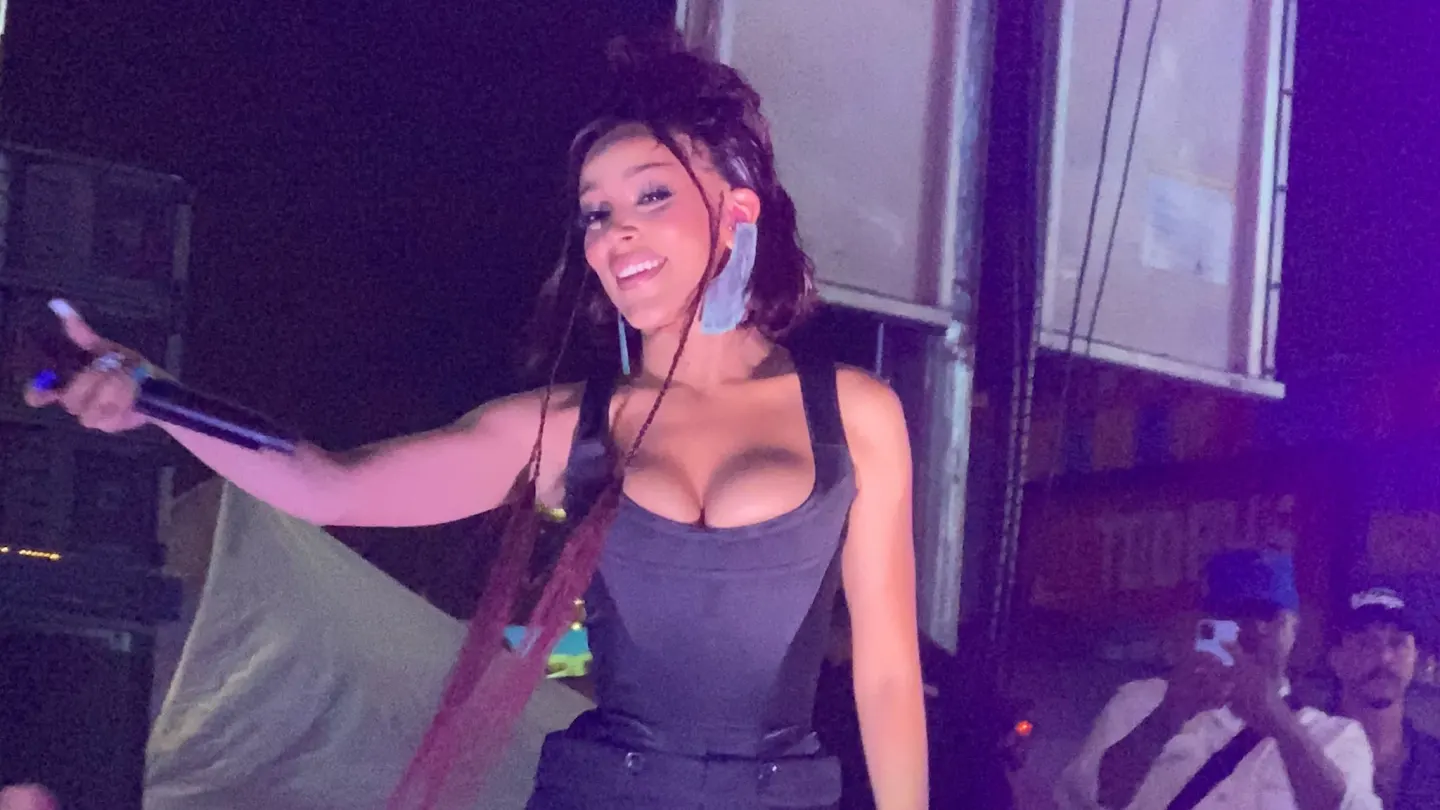
A closer look at the scenes and context surrounding Doja Cat's music.
On Vie, Doja Cat treats 1980s pop less like a destination than a wardrobe: every glossy surface gives her another character to inhabit.
Released September 26, 2025 through Kemosabe and RCA, her fifth studio album arrives after Scarlet insisted on rap as confrontation. Vie does not reverse that decision. It asks what happens when the same technical appetite is placed inside bright synthesizers, funk bass, romantic melodrama and choruses built to travel. The answer is a pop record whose pleasure comes from constant role changes.
Jealous Type turns anxiety into choreography
The lead single establishes the album's central trick. Jack Antonoff and Y2K frame the song with crisp drums and luminous synths, but Doja never settles into one clean emotional position. She sounds flirtatious, suspicious and self-mocking in quick succession. Jealousy is not presented as a confession that resolves the relationship; it is a rhythm the narrator cannot stop rehearsing.
That instability makes the hook work. The song is sleek enough for the dance floor, yet its vocal details keep disturbing the polish. Breathy notes stretch desire into unease, while the rap phrasing gives every admission a defensive edge. The production supplies the pose; Doja keeps changing the person inside it.
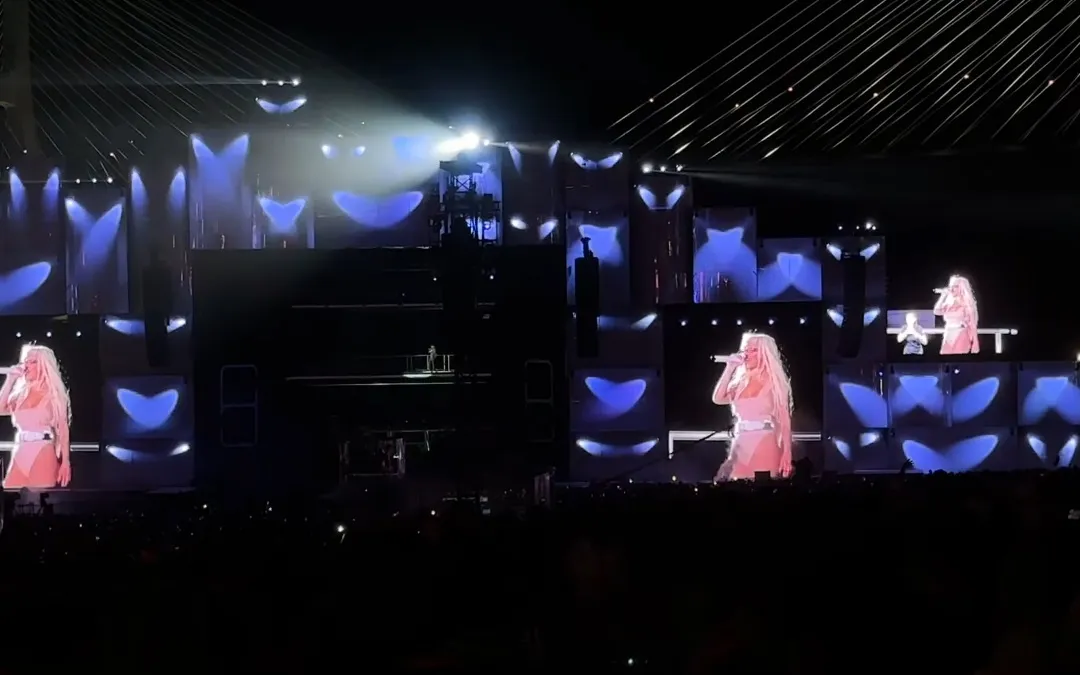
Photo: Doja Cat performing at Rock in Rio Lisboa. Camillia Kazem via Wikimedia Commons, licensed CC BY 3.0.
The voice is the album's real synthesizer
Doja Cat has always understood that genre can be altered by delivery before an arrangement changes at all. On Vie, that skill becomes the organizing principle. She slides from close-mic softness to elastic singing, clipped rap and exaggerated spoken asides. A single verse can contain the confident star, the jealous partner and the comedian watching both of them.
This is why the album's retro language avoids becoming a museum display. The gated drums, electric keys and polished bass lines may recall a specific decade, but the vocal performance behaves like contemporary internet speech: fast, self-aware and ready to revise itself. Nostalgia provides the lighting, not the script.
Gorgeous understands beauty as labor
Where Jealous Type turns insecurity inward, Gorgeous studies the performance of being seen. The track luxuriates in glamour without pretending glamour is effortless. Its longer shape allows the groove to circle while Doja tests admiration from several angles: invitation, demand, joke and warning.
The official video pushes that idea into fashion imagery, but the music already contains it. Her phrasing repeatedly interrupts the smoothness of the beat, as if the person constructing the image also wants credit for the construction. Beauty becomes less a fixed trait than a set of choices made in public.
Romance becomes a set of negotiations
The album title means "life" in French, and Doja described the project as a retro-futurist reflection on living and reliving. That broad frame becomes most convincing when the songs stay close to relationships. Couples Therapy and Acts of Service use the language of emotional maintenance, while Take Me Dancing, featuring SZA, asks movement to accomplish what conversation cannot.
These titles are almost procedural. They turn romance into appointments, gestures and repeated attempts at translation. The approach suits an artist whose music depends on switching codes. Love on Vie is not a stable mood; it is the work of finding a voice another person can hear.
From Agora Hills to a brighter kind of fiction
Agora Hills demonstrated how persuasively Doja could build a romantic world out of artificial scenery. Its dreamlike production and deliberately strange images made intimacy feel private and spectacular at once. Vie keeps that theatrical instinct but changes the temperature. The new album is warmer, more social and more willing to let the chorus carry the fantasy.
The comparison also reveals continuity with Scarlet. Doja has not abandoned rap for pop; she has moved her rapping voice into a different set. The precision, comic timing and appetite for persona remain. What changes is the architecture around them.
Where the shine becomes too even
Fifteen tracks give the concept room, but they also expose its limits. Several songs return to similar midtempo gloss, and the album can feel more carefully appointed than urgently sequenced. When every room is stylish, fewer doors produce surprise.
The writing is strongest when a vocal choice complicates the arrangement. It is less distinctive when the production supplies atmosphere and waits for personality to arrive. A shorter record might have made the contrasts sharper and allowed its strangest ideas to dominate.
Verdict
Vie succeeds because Doja Cat refuses the false choice between rapper and pop star. She treats both as performance disciplines, then uses the friction between them to animate a familiar retro palette. The record's 1980s references matter, but not as much as the speed with which she can enter and exit them.
The result is not a simple return to the accessible pop of Planet Her. It is a more self-conscious construction: romantic, funny, controlled and occasionally overdecorated. At its best, Vie proves that Doja Cat's most durable instrument is not any genre. It is her ability to make identity move inside a song. Rating: 8.3/10.
Sources: Recording Academy feature on Doja Cat's evolution and Vie; RCA Records release materials; official Doja Cat videos; Spotify.