A closer look at the scenes and context surrounding Kendrick Lamar's music.
GNX sounds like Kendrick Lamar discovering that victory is not a stable condition. It must be performed, defended and translated back into a place.
Surprise-released in late 2024 and named after the Buick model tied to Lamar’s childhood memory, the album arrived after “Not Like Us” had turned a rap conflict into a global chant. In 2026, GNX won the Grammy for Best Rap Album; “luther” took Record of the Year and Best Melodic Rap Performance, while “tv off” won Best Rap Song. The awards confirm its reach, but they do not explain its character. This is an album about what happens when public dominance has to coexist with private allegiance.
West Coast identity as active grammar
GNX does not treat Los Angeles as scenery. Regional voices, slang, drum programming and guest choices determine how the record moves. Lamar’s cadences lean into percussive attack, then loosen into speech. The effect is less a guided tour than a conversation whose local rules the listener must learn by staying close.
“squabble up” makes that grammar immediate. Its bass and clipped rhythmic space invite movement, but Lamar keeps changing facial expression inside the verse. Celebration and threat share the same pocket. The video’s references turn cultural memory into a crowded room rather than a museum display.

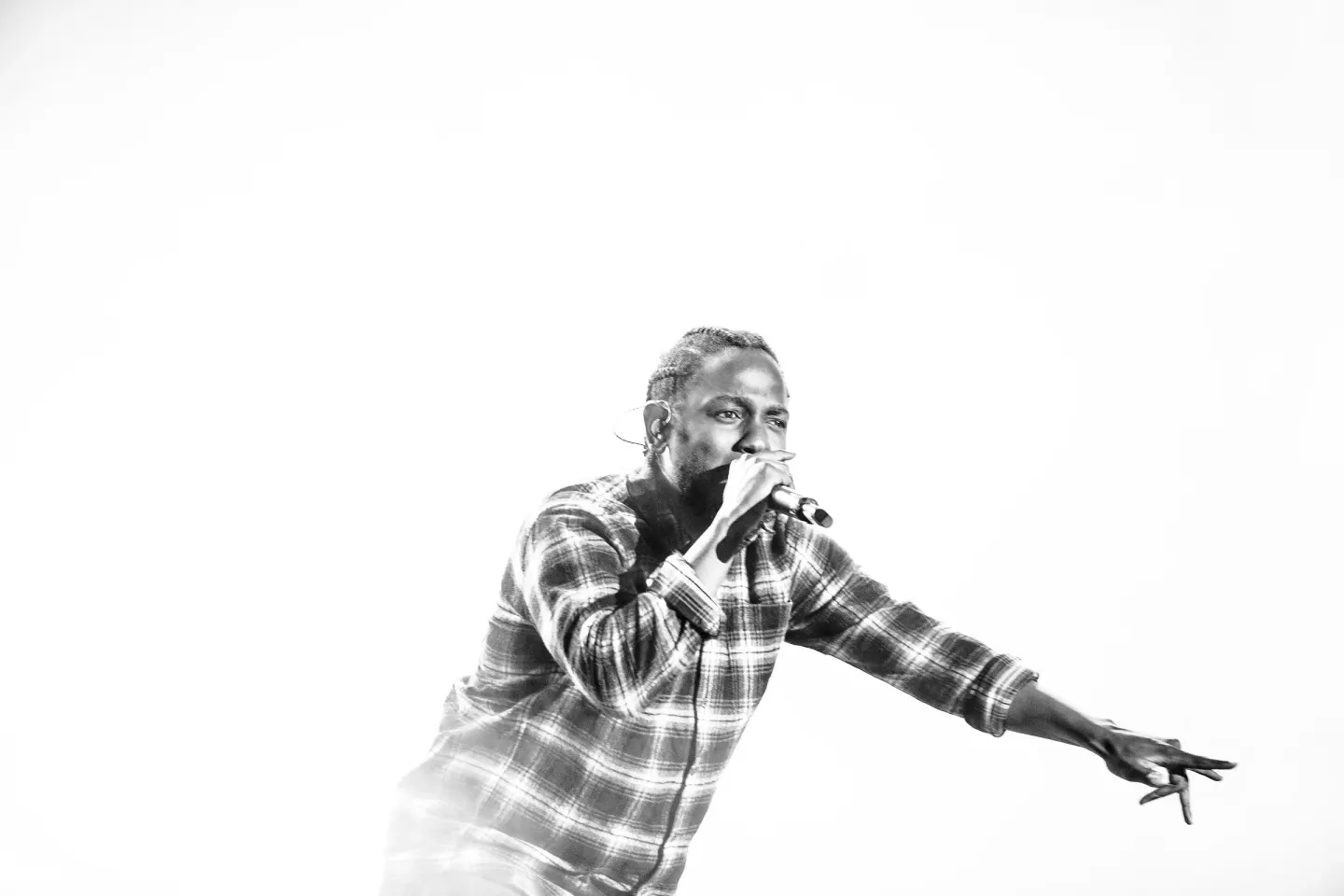
Photo: Kendrick Lamar at the 2018 Pulitzer Prize ceremony. Image by Fuzheado via Wikimedia Commons, licensed CC BY-SA 4.0. Cover image by Batiste Safont, CC BY-SA 4.0.
Voice as an instrument of jurisdiction
Lamar’s greatest production tool remains his own voice. On GNX, pitch, accent, volume and breath placement establish who controls a scene before the lyric completes its claim. A pinched tone can reduce a rival to caricature; a low murmur can make certainty feel more dangerous than shouting.
This approach prevents the album’s boasting from becoming flat. Authority is always theatrical, and Lamar lets listeners hear the costume changes. He can sound like a neighborhood narrator, a wounded partner, an impatient executive or a crowd conductor within the same sequence. The multiplicity is not indecision. It is how the record maps power.
“luther” makes tenderness structural
Featuring SZA and built around Luther Vandross and Cheryl Lynn’s version of “If This World Were Mine,” “luther” is the album’s emotional counterweight. Strings and deep low end create a suspended space in which Lamar’s clipped phrasing and SZA’s fluid lines can circle each other.
The song’s romance matters because GNX otherwise spends so much energy policing borders. Here, protection becomes imagined abundance rather than exclusion. Lamar proposes a world; SZA gives that world weather. Their voices do not merely alternate verses—they test whether tenderness can survive inside an album organized around vigilance.
Sounwave keeps the victory lap unstable
Sounwave co-produced all 12 tracks, providing continuity across beats that move between stark percussion, G-funk inheritance, orchestral color and contemporary low-end pressure. His long history with Lamar allows arrangements to respond to tiny vocal decisions instead of forcing every performance into the same grid.
On “tv off,” the production understands escalation as editing. The track does not simply get louder; it changes the terms of attention. The famous interruption works because the surrounding beat has established discipline first. When the record explodes, it feels like a command breaking through a controlled surface.
The tension between center and community
GNX repeatedly names and includes artists connected to Lamar’s home region, yet the album remains unmistakably centered on his authority. That contradiction is productive. Community appears as both responsibility and proof. Lamar wants to bring voices through the door while remaining the person who decides where the door is.
The record is most compelling when it does not resolve that tension. Its local pride can be generous, competitive and possessive at once. Rather than offering a clean civic portrait, GNX shows belonging as a negotiation conducted through sound.
Track-level listening guide
“squabble up” — hear how dance rhythm carries multiple emotional expressions.
“luther” — follow the contrast between clipped rap phrasing and SZA’s sustained melodic space.
“tv off” — notice how sectional editing creates authority before the vocal eruption.
“reincarnated” — listen for inherited cadence as a way of arguing with rap history.
“gloria” — reconsider the album’s relationships when the addressee becomes the pen itself.
Verdict
GNX is not Kendrick Lamar’s most comprehensive album, and that is part of its force. It behaves like a sharply cut dispatch: regional, competitive, romantic, suspicious and alive to the pressure of its own success. The record’s compactness keeps its symbols from settling into monuments.
The 2026 Grammy win recognizes an album that made dominance sound specific. Lamar does not merely claim the center of rap; he asks what streets, collaborators, memories and voices must be carried into that center with him. Rating: 9.1/10.
Sources: Recording Academy 2026 winners and nominee features; Interscope 2026 Grammy winners; official Kendrick Lamar videos and Spotify release information.