A closer look at the scenes and context surrounding TAEYEON's music.
On INVU, TAEYEON does not sing heartbreak as collapse. She gives it posture, temperature and distance—then lets one of K-pop’s most precise voices reveal every crack in the design.
Released in February 2022, TAEYEON’s third studio album begins from a contradiction. Its surfaces are immaculate: lunar synths, clean low end, percussion placed with architectural care. Its narrator is anything but secure. Across 13 tracks, desire keeps returning after reason has declared the relationship finished. The album’s achievement is not that it resolves this tension. It makes the tension sound luxurious, frightening and finally survivable.
I. The Thesis: Heartbreak With Its Back Straight
The title track establishes the governing image. “INVU” turns the phrase “I envy you” into a compressed hook, but envy is only the outer layer. The deeper wound is asymmetry: one person can leave love with less damage than the other. A house pulse and weightless synth line surround TAEYEON without consoling her. The arrangement keeps moving while the vocal remains emotionally suspended, which is why the chorus feels both expansive and trapped.
TAEYEON’s control is the song’s dramatic engine. She does not begin at maximum volume or decorate every bar. Verses arrive with a cool, almost reportorial steadiness; small changes in breath and vowel shape do the work that a lesser performance would hand to melisma. When the chorus opens, the high notes do not erase the restraint. They reveal how much force the restraint has been containing.
That choice separates INVU from a conventional vocal showcase. The album never asks whether TAEYEON can overpower the production. It asks how finely she can shade a feeling before the listener notices it has changed.
II. The Album’s Cold Rooms
“Some Nights” follows with a more organic frame, folding acoustic resonance and choral lift around a memory that refuses to become harmless. TAEYEON sings as if recollection has physical weight. Her lower register brings the scene close; the upper phrases widen it until private grief resembles weather. The sequencing is crucial: after the title track’s polished distance, the second song reveals what that distance was protecting.
“Can’t Control Myself” makes the damage theatrical. Its pop-rock guitars and blunt rhythmic drive sound immediate, even messy, but the performance remains sharply composed. TAEYEON moves between accusation and self-indictment without pretending they are opposites. The song understands the humiliating logic of returning to what hurts: knowledge does not automatically become escape.
The album then descends through “Set Myself on Fire,” “Toddler,” “Siren” and “Cold as Hell,” each track changing the lighting without leaving the same emotional building. “Toddler” is especially revealing. Its sleek groove frames adult disappointment through the stubbornness of a child who still wants the world to honor its promises. TAEYEON sings the metaphor without making it cute. The performance is lucid enough to recognize the regression and tender enough not to punish it.

Photo: TAEYEON performing during Girls’ Generation’s third Japan tour in Nagoya, 2014. Sweet3Haven9 / CC BY 4.0, via Wikimedia Commons. Cropped for presentation.
III. Precision Is Not the Absence of Risk
Because TAEYEON is so technically dependable, it is easy to mistake precision for safety. INVU argues the opposite. Control becomes risky when the listener can hear exactly where it might fail. In “Siren,” a dangerous attraction is rendered through coiled rhythm and a vocal that keeps leaning toward the edge of the beat. “Cold as Hell” uses harsher textures and a darker attack, letting consonants strike with unusual force. Neither track requires a climactic belt to prove intensity.
“Timeless” and “Heart” restore warmth, but not innocence. Their melodies feel familiar in the best sense: they give TAEYEON space to inhabit the classic emotional grammar of Korean pop balladry while the album’s electronic palette remains in view. The voice carries history. Listeners who know “I,” “11:11,” “Fine” or “Four Seasons” can hear earlier versions of solitude passing through, yet the singer no longer treats pain as a single event. It is a pattern she can name, stage and revise.
This is where the album’s craftsmanship becomes authorship. TAEYEON did not need to write every component for the record to possess a coherent point of view. Interpretation is her composing tool. She controls how close the microphone feels, where a phrase hardens, when vibrato arrives and when a note is allowed to remain plain. Those decisions turn a collection of songs into one emotional climate.
IV. The Necessary Flash of “Weekend”
At first, “Weekend” appears to interrupt the album. Its city-pop sheen, disco guitar and conversational ease belong to daylight, while much of INVU lives after midnight. Yet its placement near the end is essential. The song imagines freedom not as a grand transformation but as unclaimed time: no schedule, no permission, no obligation to perform distress.
TAEYEON’s lightness here is as disciplined as her anguish elsewhere. She trims the phrases, rides the groove and lets charm emerge from timing rather than force. The contrast prevents INVU from fetishizing sadness. A person can be devastated, stylish, self-aware and briefly carefree without one state invalidating another.
“No Love Again” and “You Better Not” sharpen that release into boundary-setting. The album does not present recovery as a clean upward line; confidence arrives in flashes, sometimes defensive, sometimes playful. That unevenness makes the closing stretch believable.
V. “Ending Credits” and the Art of Leaving the Frame
The final song finds the image the album has been searching for. “Ending Credits” treats a relationship as a film whose emotional labor has continued after the story is already over. Synths rise like house lights, and TAEYEON sings from the peculiar silence after an audience has gone. There is grief in the empty room, but also authorship: she can finally decide where the scene ends.
The closer does not transform envy into forgiveness or erase the compulsions described earlier. It offers something more modest and more durable—a perspective outside the immediate wound. After an album spent inside immaculate cold rooms, the narrator can see the set, the lighting and the exit.
That is why INVU remains one of TAEYEON’s defining records. It joins elite vocal technique to an unusually exact concept of emotional distance. The production never reduces her to a voice floating above expensive surfaces; the voice gives every surface a psychological function. Heartbreak becomes architecture, and control becomes the sound of someone finding the door.
Verdict
9.1 / 10
Essential tracks: “INVU,” “Some Nights,” “Can’t Control Myself,” “Toddler,” “Ending Credits”
Best production detail: the title track’s tension between forward-moving house rhythm and emotionally suspended vocal phrasing
Defining strength: a complete album concept created through interpretation, sequencing and vocal restraint
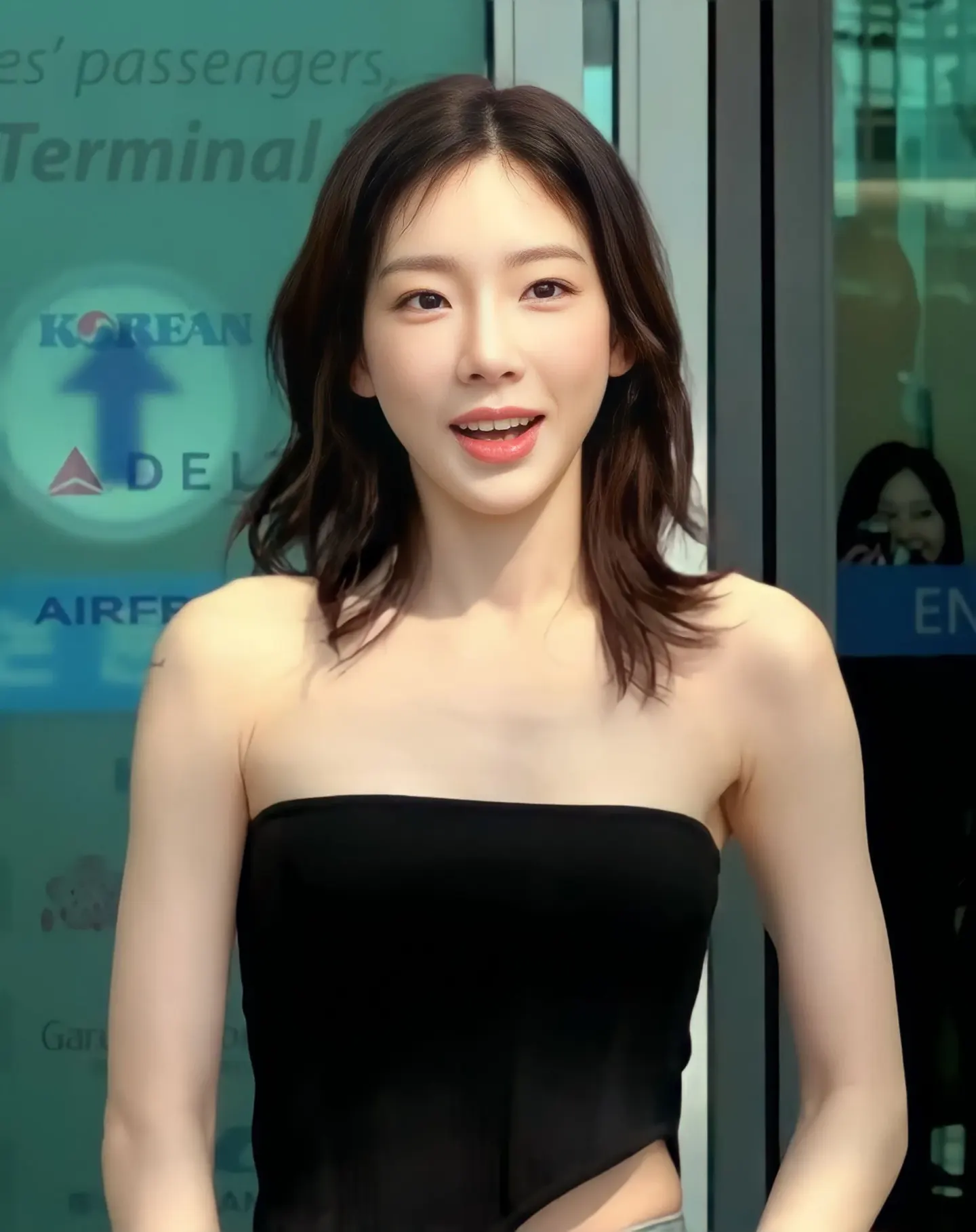
Cover photo: TAEYEON at Incheon Airport, 2023. TV10 / CC BY 3.0, via Wikimedia Commons. Cropped for presentation.