Breaking08 / Industry
AI agents enter alien signal search at 2.4 terabits a second
 Nuri Kang· Industry
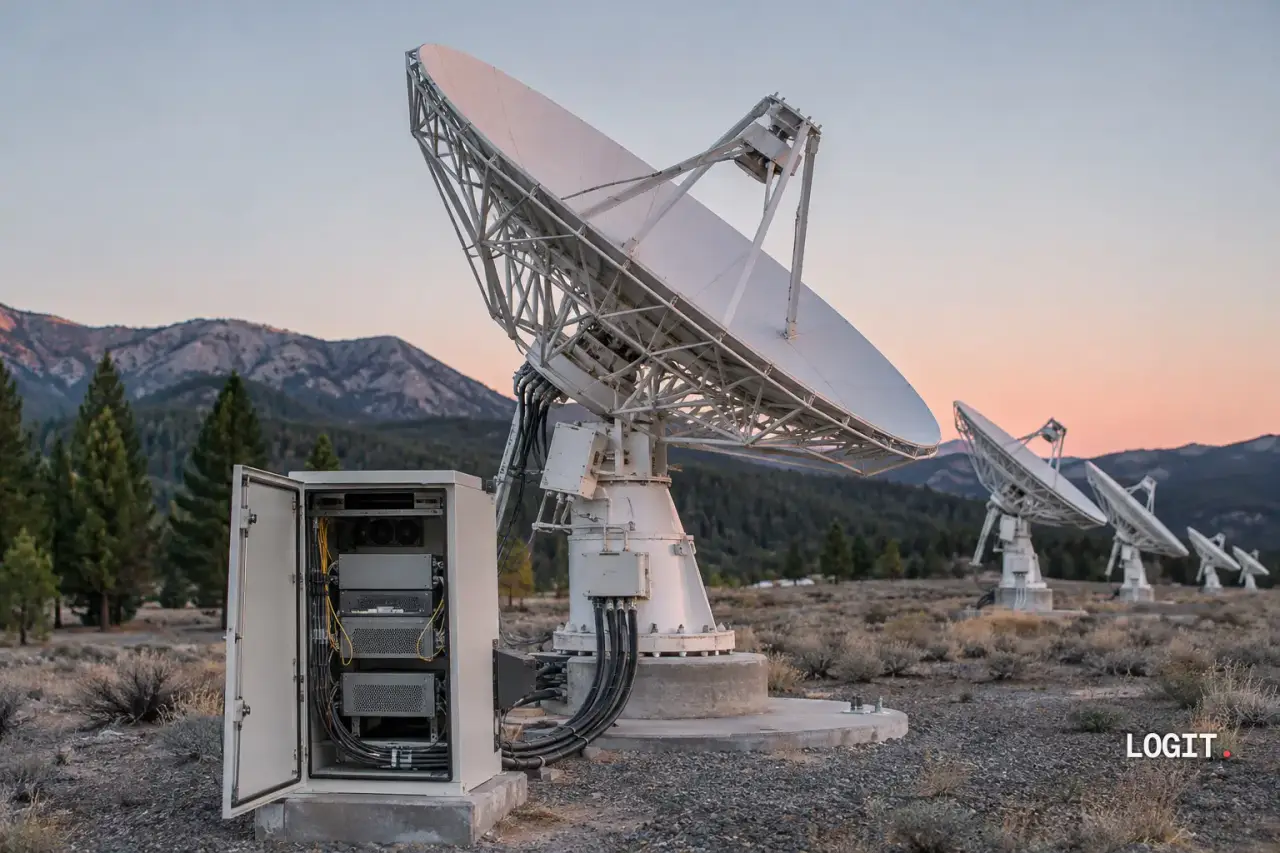
NVIDIA announced on 31 Oct 2026 that an AI agent system used in the search for extraterrestrial signals can process 2.4 terabits of data per second. The agents cut work that would take humans weeks or years to a matter of hours.
Breakthrough Listen and the SETI Institute have brought AI agents to the Allen Telescope Array in Northern California, according to the announcement. From a single natural-language request, an agent can steer the telescope, correct data and apply AI models. Andrew Siemion, principal investigator of Breakthrough Listen, said what such observatories find may have more in common with AI than with humans.
Components. NVIDIA's announcement states that DAQIRI, a Holoscan platform library, passes sensor data straight into GPU memory. It also states that CyberEther, developed at the SETI Institute, computes the signals with NVIDIA CUDA-X libraries. Nexus, a web-based observatory management tool, provides equipment status and compute resource information in one place, the company said.
NVIDIA said the 2.4-terabit throughput was reached on NVIDIA RTX PRO 6000 Blackwell GPUs. Inference runs next to the observing equipment. With the system, an agent can steer antennas, calibrate and focus the instrument, fix data errors and plot the results.
NVIDIA said radio telescopes generate so much data that selecting signals during an observation has been difficult. It announced that the pipeline achieved the first real-time AI detection of a pulsar in the Crab Nebula. A pulsar is a rapidly spinning stellar remnant that pulses like a lighthouse.
The team is next evaluating open models including NVIDIA Nemotron, the company said. The evaluation covers work where data location and processing time matter most, and observatories that may one day run offline on the far side of the moon. NVIDIA has not disclosed when the evaluation will finish or how accurate the pulsar detection was.