Breaking08 / Industry
Yejin releases Korean 8B model trained on eight Nvidia H200s
The official technical document and the model card list different parameter counts, so the scale behind the 8B label needs explaining.
 Taeoh Kwon· Industry
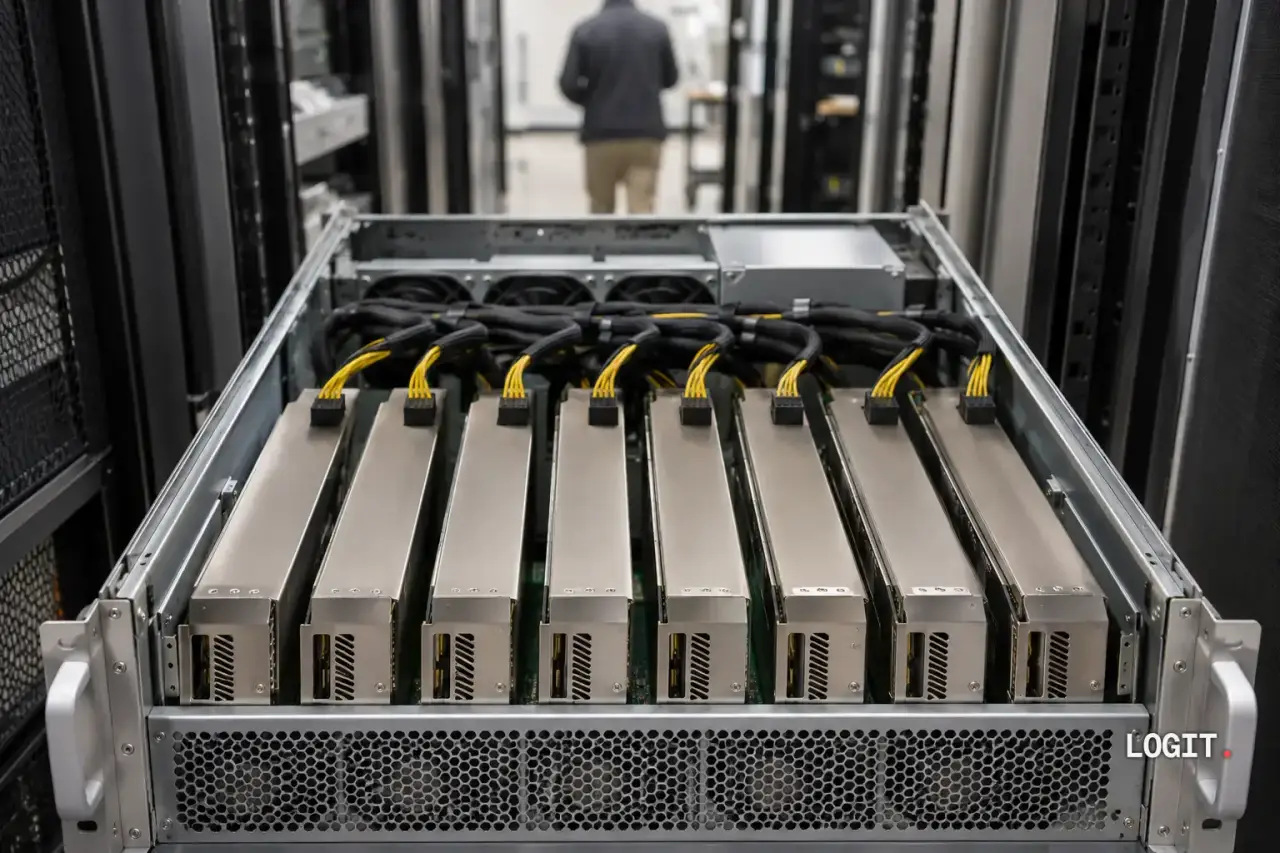
Yejin, a South Korean AI company, said on 6 Nov 2026 that it had developed Yejin 8B v3, a Korean-focused foundation model trained on eight Nvidia H200 graphics processing units (GPUs) supplied through a government programme, according to AI Times, a Korean AI news outlet.
Parameters. AI Times reported 8 billion parameters, but the model card's specifications list about 7.52 billion. The official technical document gives about 7.24 billion, so the company's own documents disagree.
According to the model card, the model has 32 layers, a hidden size of 4096, a vocabulary of 64,000 and an input limit of 4096 tokens. The technical document puts its size at about 15GB and discloses about 2.7TB of raw data and 138.4 billion training tokens: 83.9 billion foundational and 54.5 billion specialist knowledge.
Yejin's technical document states that the model started from random initial weights and that the work ran from tokeniser design through training. The company said the cosine similarity, a measure of how alike two sets of values are, between its weights and those of six open models is 0.0014 or lower. The model card's tags include qwen3-architecture, and the company's documents name the weights, tokeniser and training as the work it did independently.
Release terms. The model card shows the weights released under the Apache 2.0 licence, as a base model without instruction alignment, the training that teaches a model to follow requests. The K-AI average score of 0.366 in the technical document belongs to a conversational post-trained model built on v3, not the public base model.
According to AI Times, the GPUs came through a high-performance computing support programme run by the Ministry of Science and ICT (MSIT), South Korea's technology ministry, and the National IT Industry Promotion Agency (NIPA), a state IT agency. Yejin's website offers custom deployments for Korean companies and public bodies, with costs quoted after consultation.
The company said chat functions will come in later aligned models. It has not disclosed why the parameter count differs between its documents or the detailed experimental data behind the weight-similarity figure.