01 / AI · Analysis
Flexible display serves both people and robots
People read visible colours while robots use cameras to read near-infrared patterns on the same screen, according to AI Times.
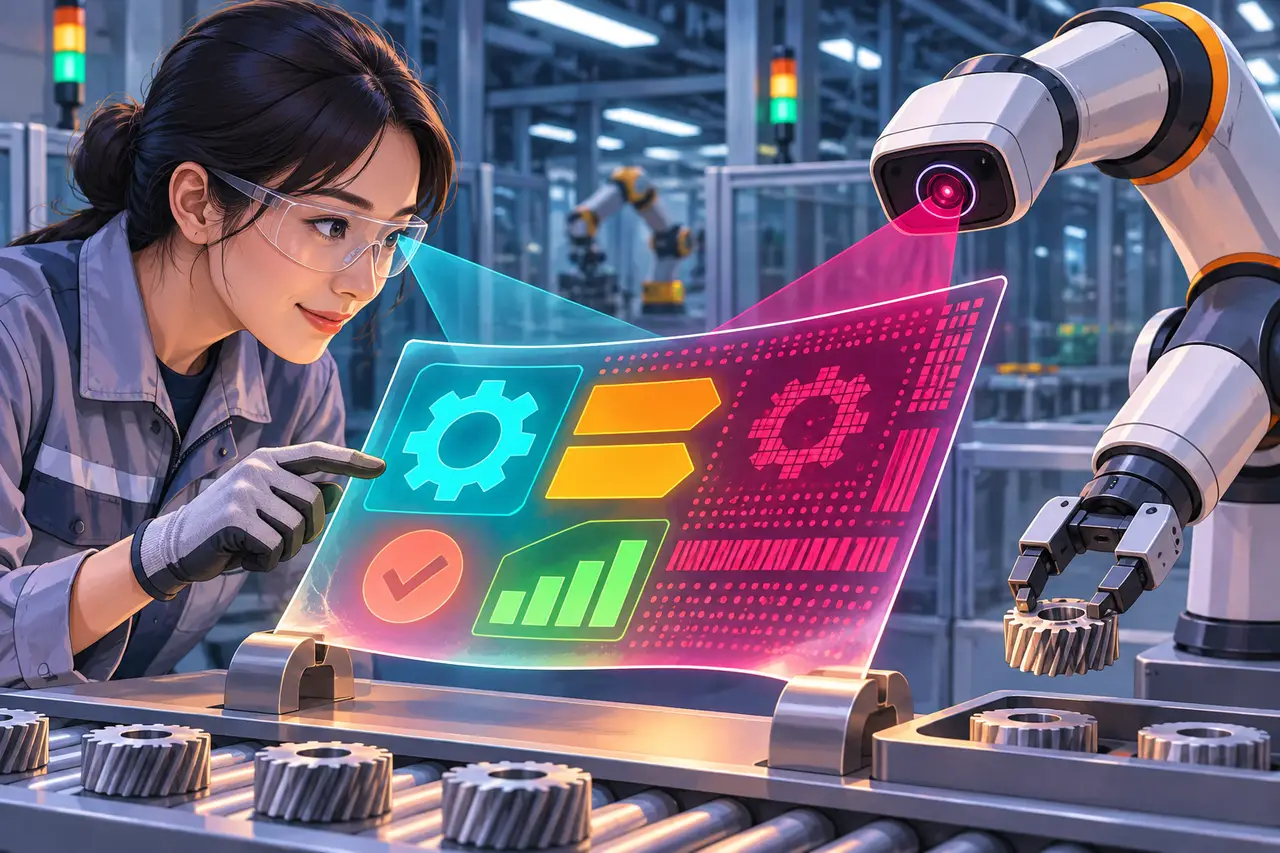
A joint research team at KAIST and Yonsei University developed a flexible display to convey information to people and robots through one screen, AI Times reported. KAIST is a South Korean science and technology university, and Yonsei is a South Korean university.
According to the report, the design gives people and robots different ways to read information from the same display. People use visible colours, while robots read near-infrared patterns through cameras.
AI Times presented this shared screen as a way for workers and robots to exchange information in smart factories and physical AI environments. The proposed use links the display’s two reading methods to a common workplace.
Two ways to read one screen
According to AI Times, people read information expressed in visible colours on the display. This provides the human-facing part of the shared screen.
Robots use cameras to read near-infrared patterns on the same display, the report explained. Near-infrared is light outside the range visible to the human eye. The design therefore shares information while keeping the reading methods separate.
Shared information for workers and robots
AI Times identified smart factories as a possible application. In that setting, workers and robots would use the display to share information through their respective reading methods.
The report also identified physical AI environments, where AI operates through machines in the physical world, as a possible application. Its proposed role for the technology is a common screen that accommodates how both people and robots read information.