Breaking01 / AI
NVIDIA names accuracy, safety as tests for commercial robots
NVIDIA held that reaching the level of autonomous driving does not alone meet the conditions for commercialisation, but its public event documents set no threshold figures.
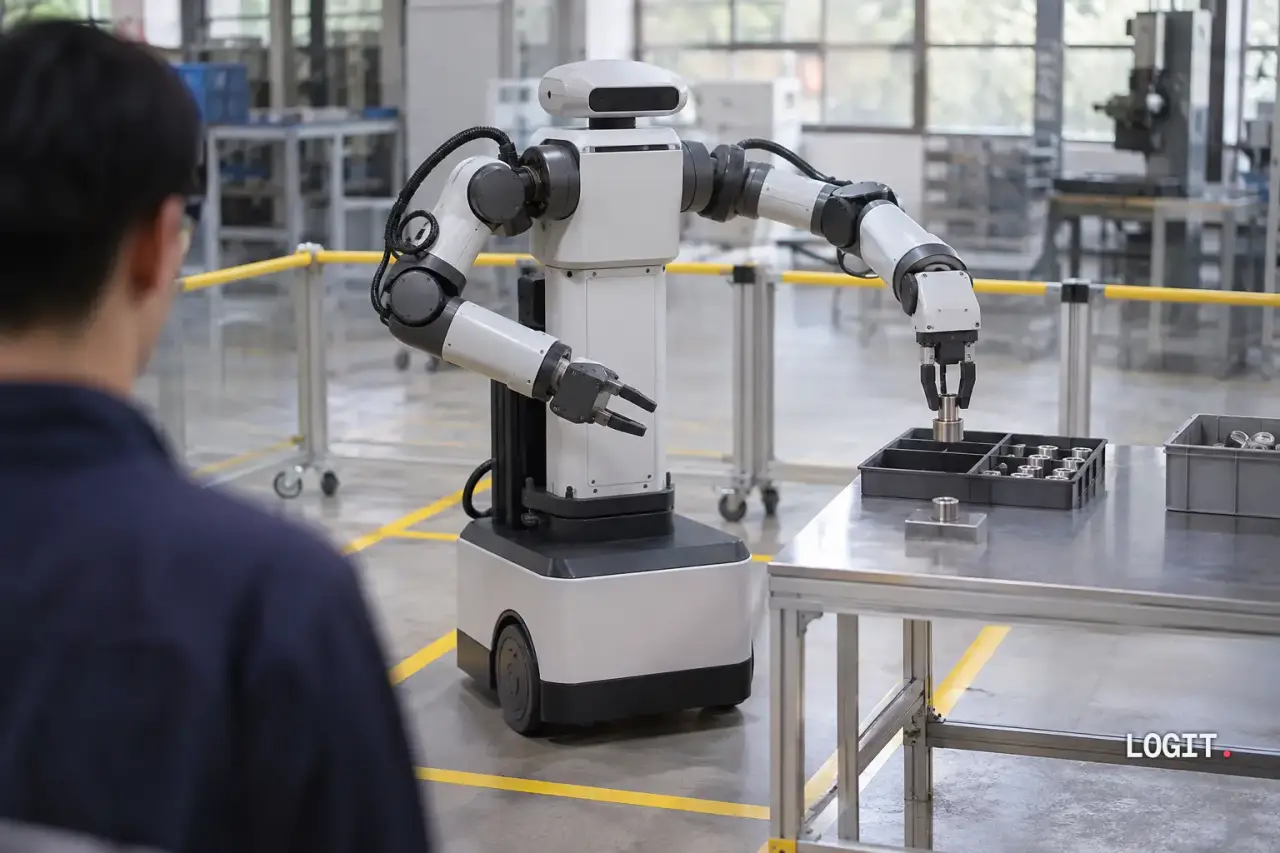
SEOUL — NVIDIA named general-purpose task capability, accuracy, safety and economic viability as the conditions for commercialising physical AI on 9 Nov 2026, TechM, a South Korean technology news outlet, reported. Physical AI is AI that moves and acts in the real world, as robots do.
According to TechM, Deepu Talla, NVIDIA's vice president of robotics and edge AI, addressed the challenges of commercialisation at a media roundtable. NVIDIA's view was that fields such as autonomous driving have reached the implementation stage, but that this level is not a necessary and sufficient condition for commercialisation. The company also listed repeated training and validation in digital twins, virtual environments modelled on the real world, as a challenge for deployment on site.
NVIDIA announced AI Day Seoul 2026 for 9 to 10 Nov 2026 at COEX, a convention centre in Seoul. The schedule for 10 Nov 2026 included a one-day workshop held in Korean, according to an NVIDIA preview post.
NVIDIA's official event listing gives Talla's session topics as the roadmap for the Isaac robotics platform and AI factories. NVIDIA describes Cosmos as an open platform for building and deploying world models, AI that simulates real-world environments, for physical AI.
NVIDIA's public event documents do not give threshold figures for the accuracy or safety required for commercialisation.