01 / AI · Analysis
IceNest cuts Arctic passage timing error in simulations
The reported reduction in passage start-date error comes from simulated voyages and needs to be distinguished from accuracy in forecasting ice distribution.
 Yejun Son· AI
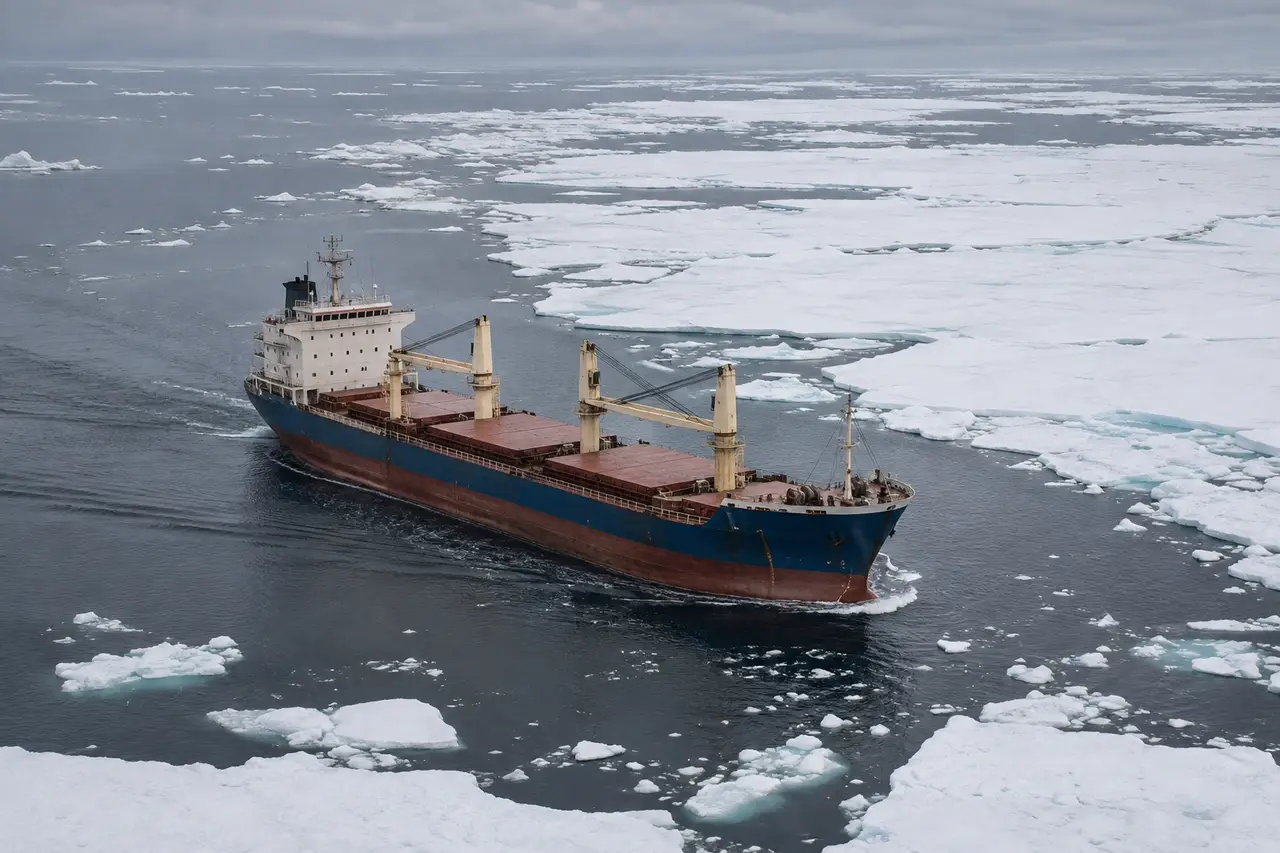
IceNest, developed by researchers at the Ulsan National Institute of Science and Technology (UNIST), reduced passage start-date prediction error in simulated Arctic voyages, AI Times reported; independent replication has not yet been confirmed.
According to AI Times, the technology forecasts Arctic sea-ice distribution to help assess when ships can use the Northern Sea Route. The approach connects predictions of where ice lies and how concentrated it is with the timing of route access.
The improvement reported by AI Times concerns the average error in predicting when passage becomes possible. That distinction matters: a reduction in start-date error is a different measure from the accuracy of the ice-distribution forecast itself.
Forecasting when passage becomes possible
AI Times reported that a UNIST team led by Professor Im combines satellite observations with generative AI. The system predicts ice location and concentration up to 30 days ahead (Arctic sea-ice distribution forecasts).
According to the report, average passage start-date prediction error fell by about 58% compared with existing models (simulated Northern Sea Route voyages). This is a relative reduction in prediction error, rather than the percentage of passage dates predicted correctly.
The limits of simulated voyages
The comparison reported by AI Times uses simulated Northern Sea Route voyages as its evaluation setting. The improvement under those conditions cannot be treated as an equivalent gain in actual ship operations. Independent replication has not yet been confirmed.
The next test is whether ice-distribution forecasts translate reliably into assessments of passage timing. Building on the simulated-voyage result reported by AI Times, further evaluation needs to establish whether start-date errors also fall under different conditions. That would help assess the approach's practical value.