02 / IT · Analysis
AI reverse engineering puts indie game demos in focus
Recreating play sequences from public demos raises a problem for indie developers who rely on those demos to gather feedback.
 Dogyeom Baek· IT
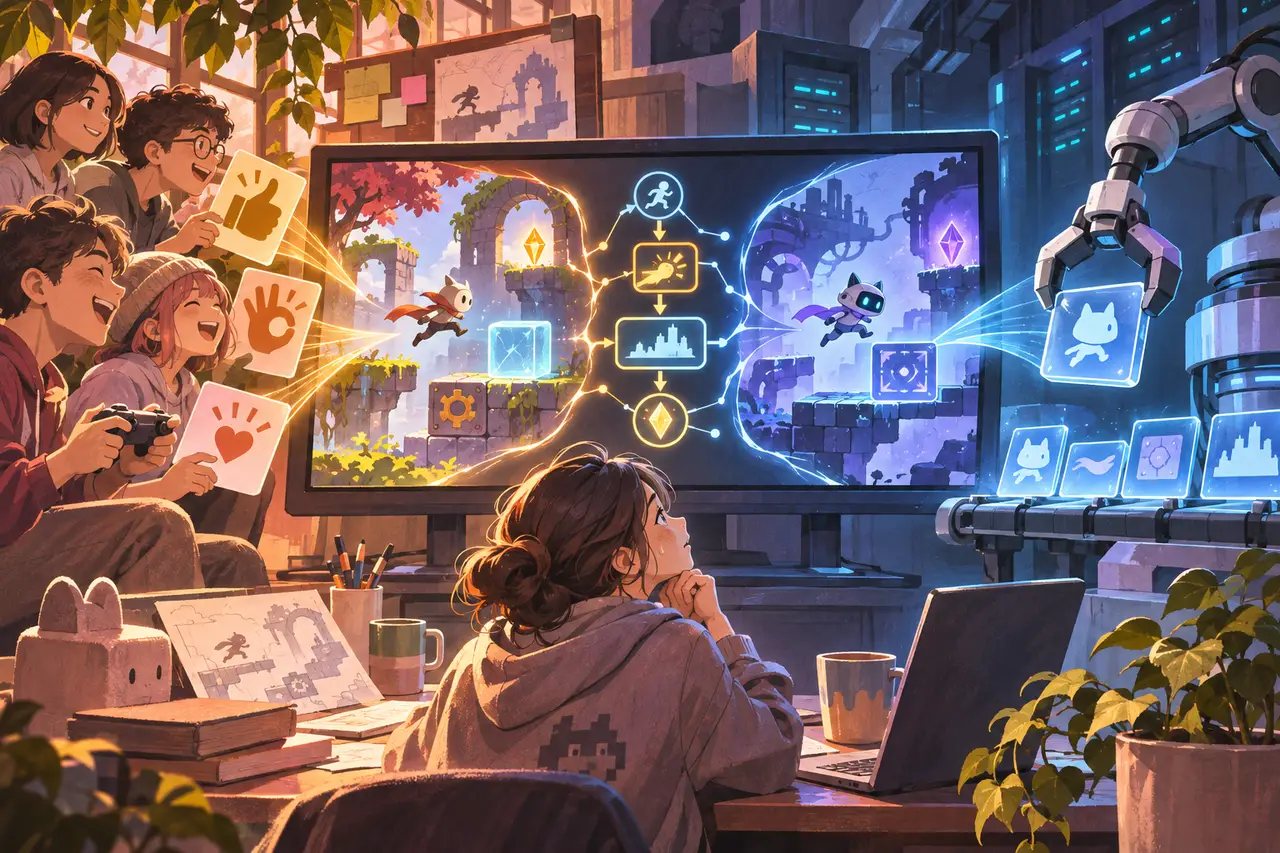
GameMeca, a Korean games publication, reported on AI reverse engineering that uses public gameplay videos or demos to make similar games. The process analyses how a game works and how play progresses. It turns material released for audiences into a basis for reproduction.
For indie developers, releasing a demo is an important opportunity, GameMeca explained. It lets them meet players and gather feedback before launch. It also helps them assess the game's prospects.
The report brings these two uses of public material together. What developers show to seek feedback can also become material for recreating their game. The distinction is between why developers share it and how others subsequently use it.
Recreating the sequence of play
GameMeca described a process that analyses game mechanics and the progression of play through public videos or demos. The focus here is how the game unfolds. What appears on screen and the order in which things happen are distinct aspects to consider.
The hypothetical scenario opening GameMeca's report illustrates that distinction. A similar game has a different title and characters, yet introduces new features in a familiar order. The sequences of clearing stages and receiving rewards also resemble those in the original game.
Demos as feedback channels and material for reproduction
In GameMeca's account, demos give developers a way to hear from players before release. The AI reverse engineering it describes uses those same demos as material for analysis. One public release thus serves different purposes for the developer and those reproducing its gameplay.
The value GameMeca assigns to demos cautions against treating publication itself as the problem. Showing a game to players is also part of gathering feedback. The issue therefore extends beyond whether to release a demo to how its publicly visible play sequences are used.