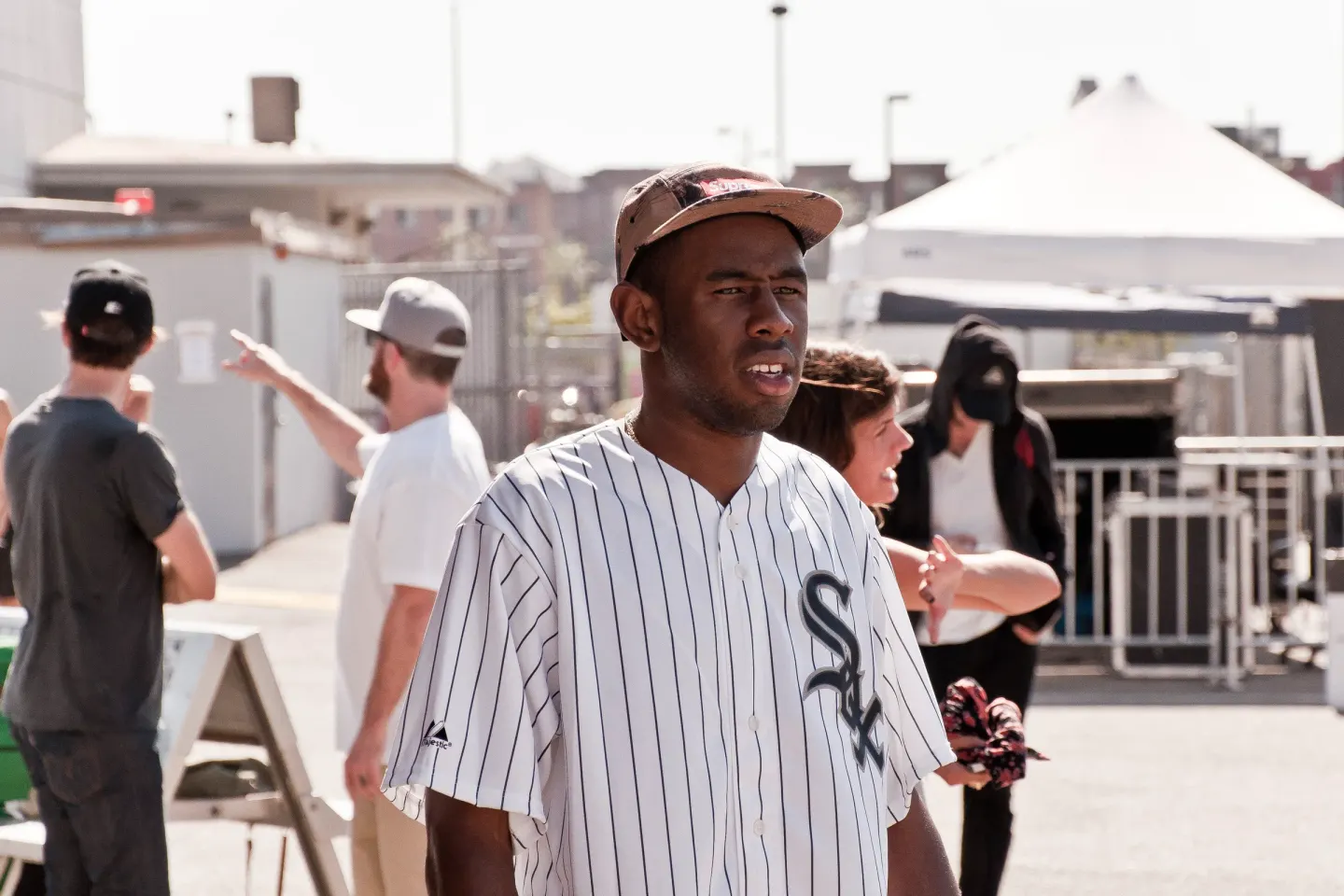
A closer look at the scenes and context surrounding Tyler, the Creator's music.
DON’T TAP THE GLASS is Tyler, the Creator removing the chair from the listening room. Its argument begins only when the body moves.
Released in July 2025 while he was still touring CHROMAKOPIA, the 10-track album is the shortest full-length of Tyler’s career. He described it as music for dancing, driving and running, written after friends admitted they avoided dancing in public because they feared being filmed and turned into a meme. That premise gives the record more weight than its compact form initially suggests: pleasure has become a risk performed under surveillance.
Short form as an ethical decision
The album does not provide the elaborate narrative scaffolding associated with IGOR or CHROMAKOPIA. Songs arrive, establish a physical idea and leave before reflection can domesticate it. The absence of explanation is the point. Tyler asks listeners to trust sensation before interpretation.
This economy keeps the record urgent. Bass lines do not wait for permission, drums favor immediate legibility, and hooks often behave like instructions shared across a dance floor. The sequencing values momentum over prestige.
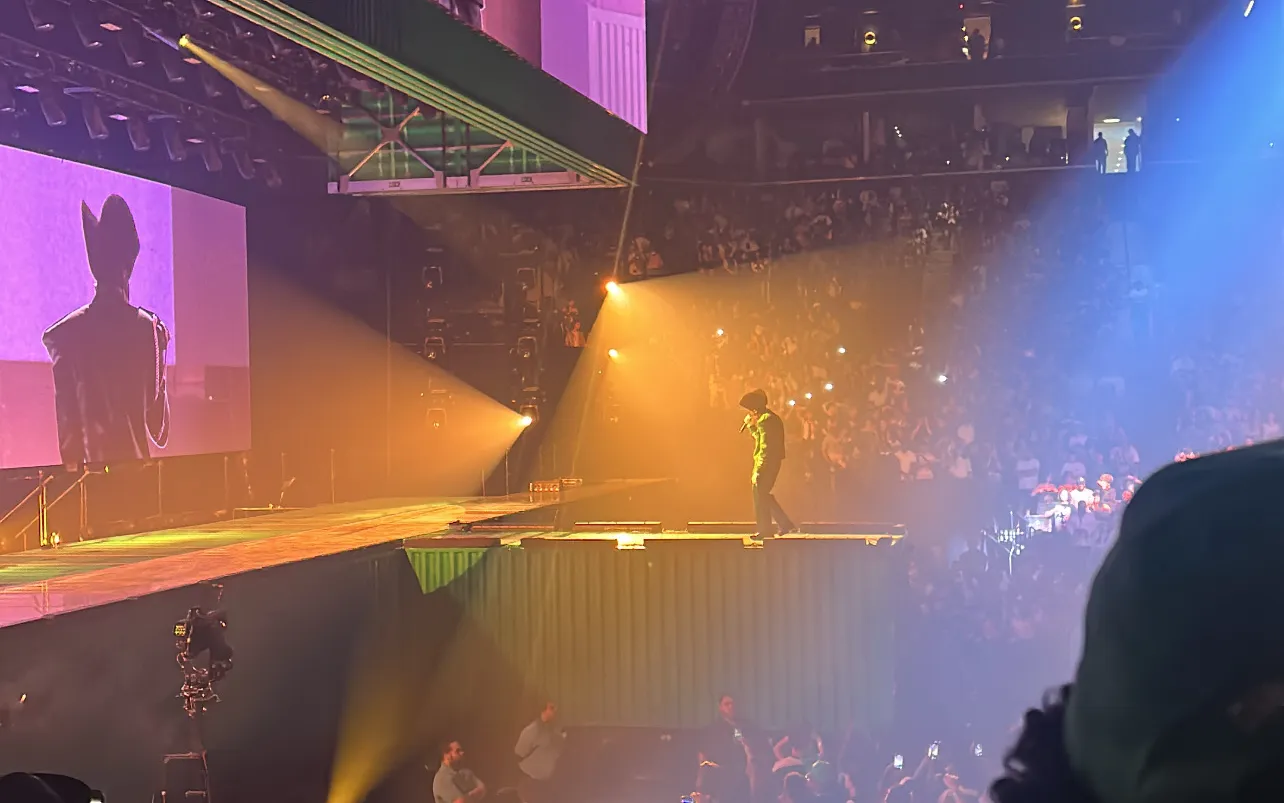
Photo: Tyler, the Creator performing “Darling, I” at Barclays Center in 2025. Image by Jckndthebeanstlk via Wikimedia Commons, licensed CC BY-SA 4.0. Cover image by Incase, CC BY 2.0.
“STOP PLAYING WITH ME” makes watching part of the beat
The video surrounds Tyler with famous observers including Clipse and LeBron James, turning recognition into a kind of pressure. Yet the track refuses to become self-conscious. Its rhythm keeps insisting that spectacle can still produce communal energy.
Tyler’s voice is blunt and dry, occupying the beat like another drum. He does not soften the command into a melodic invitation. The performance treats confidence as kinetic: it exists because the track continues forward.
Movement without innocence
The album’s anti-surveillance premise is not nostalgic. Tyler does not pretend clubs or public spaces were ever free of judgment. Instead, he identifies a newer paralysis: every awkward gesture can be isolated, circulated and permanently captioned.
DON’T TAP THE GLASS answers by making awkwardness useful. Repetition, shouted phrases and sudden changes encourage participation that does not require elegance. The body only has to commit before the mind edits it.
“Sugar on My Tongue” turns desire mechanical
The track’s synthetic pulse and clipped vocal design make flirtation feel engineered and immediate. Desire is not described from a distance; it becomes the mechanism moving the song. The official video pushes that physicality into deliberately provocative theater.
Tyler’s production works through contrast: warm harmonic instincts meet hard digital edges, while playful surfaces conceal exact rhythmic discipline. The song can feel reckless because its structure is controlled.
A deliberate retreat from confession
After CHROMAKOPIA examined aging, family, intimacy and paranoia, this album’s braggadocio can sound like avoidance. Tyler acknowledges the contrast himself. But retreat is not necessarily regression. A diary and a dance record ask different things from the listener.
The comparison with “EARFQUAKE” is instructive. That earlier song made vulnerability memorable through melodic fragility and an unstable persona. DON’T TAP THE GLASS relocates instability to the room: the listener must decide whether to remain an observer or enter the rhythm.
Where brevity limits the record
Some tracks end before their most interesting production questions develop. The refusal of depth can occasionally feel like a refusal of consequence. Tyler’s best albums usually allow pleasure and discomfort to contaminate each other over time; here, speed sometimes keeps them separate.
Still, the narrow brief creates unusual coherence. The album knows exactly what it wants the body to do, even when it leaves the mind wanting another verse.
Verdict
DON’T TAP THE GLASS is not a minor release disguised as a major one. It is a purposeful reset of scale. Tyler uses a short album to recover a form of listening that cannot be completed by commentary, screenshots or reaction clips.
Its pleasures are direct, but its anxiety is contemporary: how much movement survives once everyone imagines the camera? Tyler’s answer is to make the beat stronger than embarrassment. Rating: 8.6/10.
Sources: Recording Academy release report and 2026 nominations; official Tyler, the Creator videos; Columbia Records and Spotify album information.