Breaking01 / AI
DeepMind reports Gemini 4 Argon at 87% on physical reasoning
The company's blog post mixes physical robots and simulation in its demonstrations and gives no scores for the models it compares against
 Yejun Son· AI
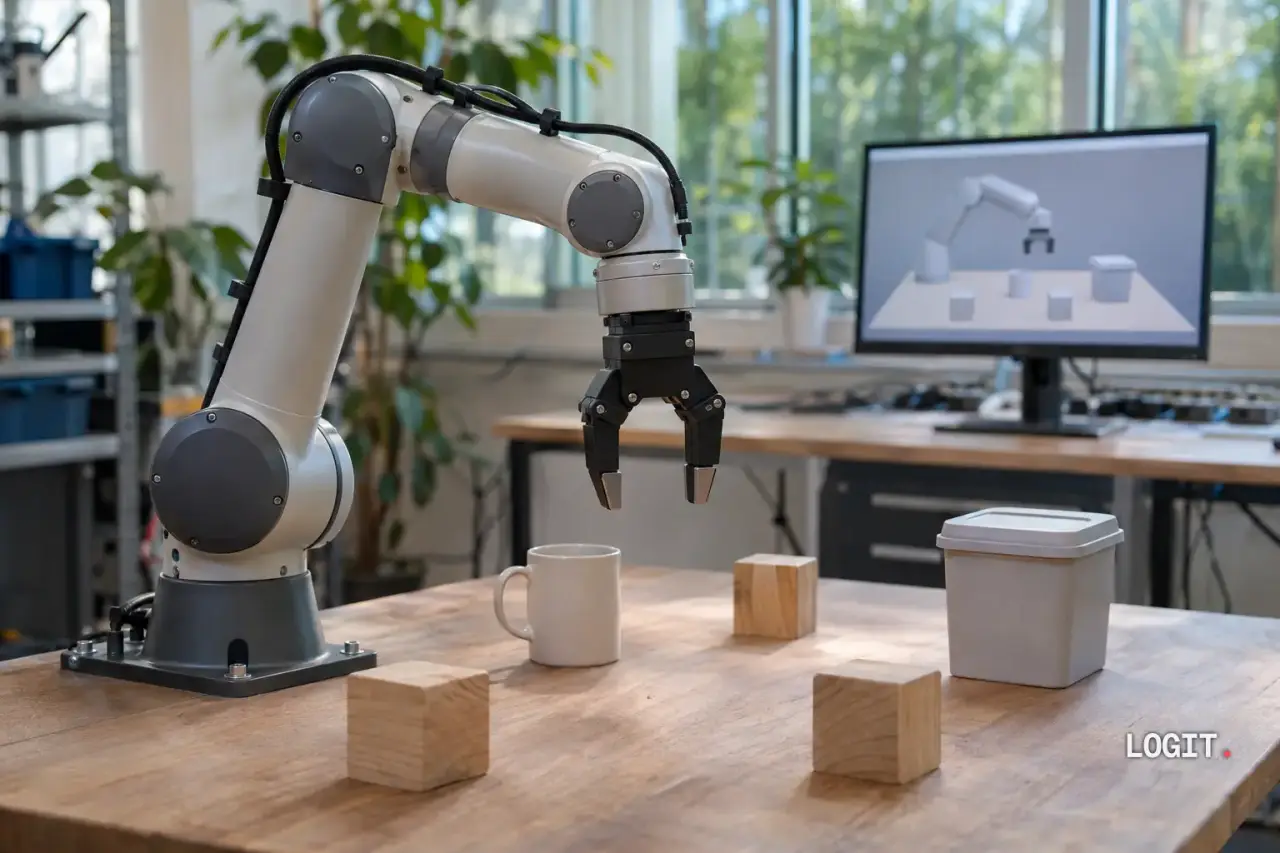
Google DeepMind reported on 13 Oct 2026, in a company blog post, that Gemini 4 Argon scored 87% (pure reasoning) on the Embodied Reasoning benchmark (ERQA); no independent replication has been presented.
According to the post, ERQA measures the ability to understand and solve physical and spatial problems in 3D environments. The company claimed the 87% score is higher than that of every other frontier model. It describes Argon as a general-purpose physical reasoning model for the entire robot development lifecycle and presents representative examples.
Physical robots. The company reported that Argon used a Boston Dynamics Spot robot (12 degrees of freedom in the legs, 6 in the arm) to throw a can into a foot-pedal bin. In the sequence described, Argon builds a digital twin, a virtual replica of a physical object, of the bin in the physics simulator MuJoCo, practises there and then steps on the real pedal. The post also includes a zero-shot control example, meaning control without prior examples of the task, in which a robot arm sets a fallen mug upright and puts a napkin inside.
Simulation. Google DeepMind claimed that Argon built a ball-throwing scene for a humanoid with 76 degrees of freedom from a hand-drawn sketch and knocked down all the target boxes (6/6, closed-loop physics simulation). That result was measured inside the mujoco_warp simulation, not on a physical robot. The prompt published in the post also names mujoco_warp as the verification environment.
The company also reported that a 136-second video of the two-armed robot ALOHA 2 folding origami was labelled after the fact with 6 subtasks and 17 contact-level actions. Its description includes a quality-control step that holds task progress flat during fumbles and retries.
The ERQA section of the post gives no scores for the individual comparison models, the post reports no success rates for the demonstrations, and no independent replication of the 87% score or the demonstration results has been presented.