01 / AI · Claim vs. Check · Analysis
LEMMO extends signal analysis to detailed descriptions
The study broadens evaluation from signal classification to factual descriptions, with gains measured against comparisons published by the researchers.
 Gyeol Han· AI
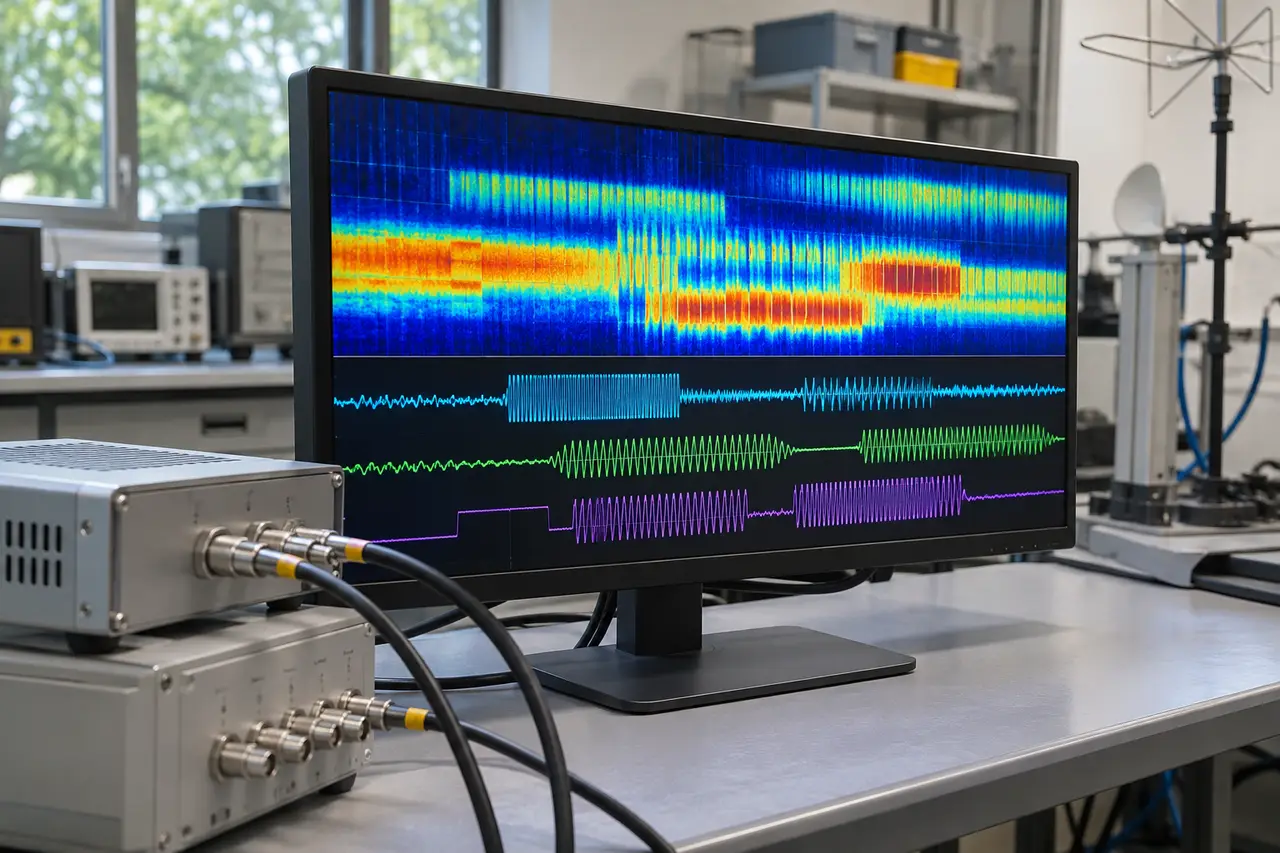
The LEMMO researchers announced a model for understanding long electromagnetic signals and the release of a 1.38-TB signal collection.
The paper's abstract describes existing waveform models as primarily evaluated on short signal segments. It identifies understanding long recordings and describing their contents in detail as areas that remain insufficiently explored.
The researchers presented signal recognition and detailed description together. The study evaluates both whether the model classifies signals correctly and whether its descriptions contain accurate facts.
Describing relationships between signals
The abstract sets out recognition and description as the model's objectives. These cover identifying signals and explaining their contents in detail.
The researchers described queries tailored to instructions to retrieve evidence from signals. Compact queries support recognition, while structured queries support detailed descriptions.
According to the abstract, those descriptions cover scene-level properties, individual signal attributes and relationships between signals. The structured queries receive additional training focused on factual information.
The scope of the reported gains
In researcher-published benchmark figures, LEMMO improves mean perception accuracy on EM-Bench by 15.77% compared with MERLIN-LoRA. The abstract does not provide the comparison model's absolute accuracy.
The researchers also reported improved scores for categorical and numerical facts in the LEMMO-LongDesc description evaluation. The study's evaluation therefore extends from distinguishing signals to assessing the factual accuracy of descriptions.