01 / AI · Analysis
Fewer bird-deterrent responses leave crop protection unclear
A reported fall in device responses is a separate claim from a reduction in crop damage.
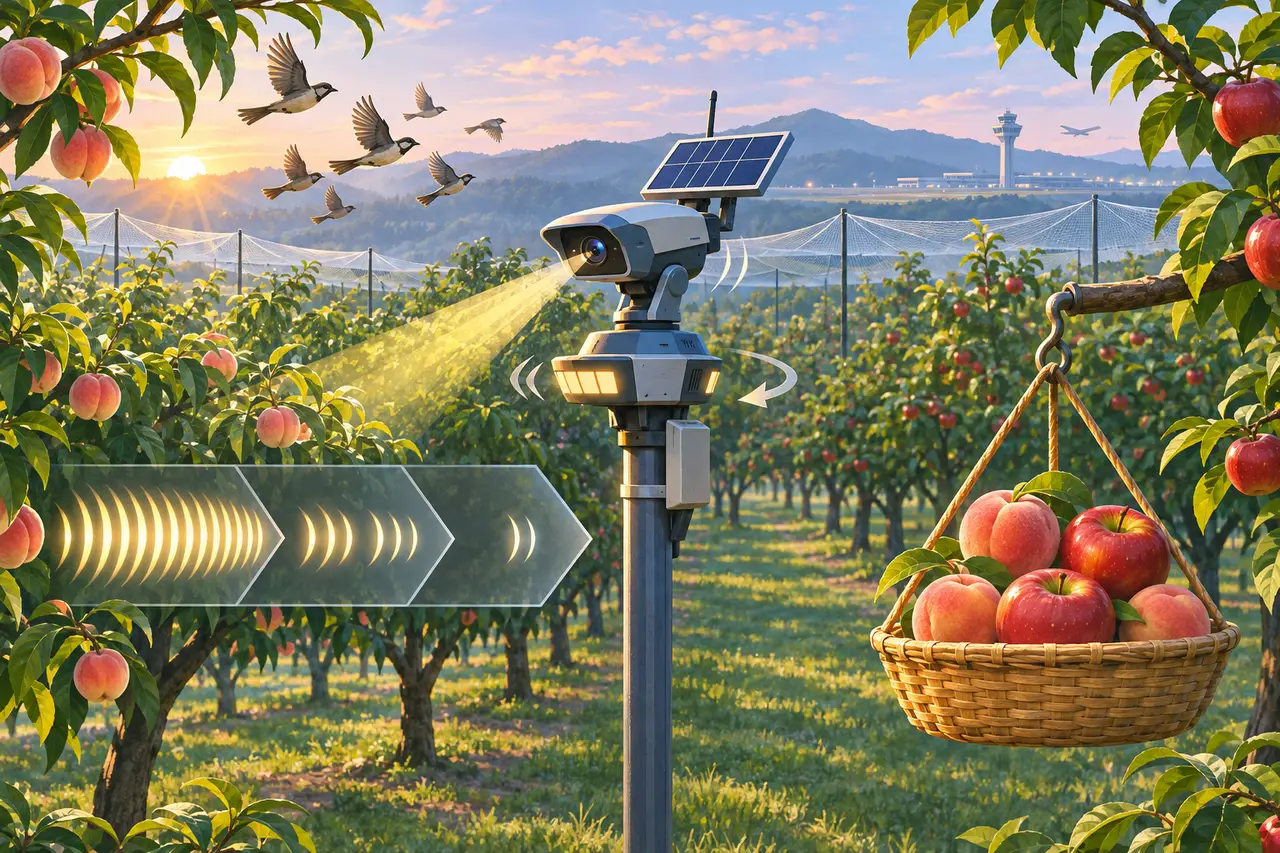
A Korean-developed AI bird deterrent underwent field trials at seven peach and apple orchards, Tech42 reported.
According to Tech42, a Korean team developed the hardware, software, AI models and data. The report described a field application of physical AI, meaning AI that operates physical devices.
Tech42 identified habituation, in which birds become accustomed to deterrents, as a concern for farmers. Assessing that problem requires a distinction between the device's response logs and damage to crops.
What fewer device responses mean
Tech42 reported that the device initially responded 300–400 times a day on days with frequent activity. After two to three weeks of installation, responses fell to a few a day.
The decline reported by Tech42 measures device responses. Fewer responses and less crop damage at harvest are separate claims.
The office of Yoon Jun-byeong, a member of Korea's National Assembly, reported that vegetables suffered the most damage, followed by apples, rice and pears. That ranking covers crop damage caused by wildlife.
The crop ranking provides context for the need for protection. Assessing a particular device's performance requires evidence of changes in damage at the farms using it.
Separate criteria for installation decisions
Korea's Enforcement Rule of the Airport Facilities Act addresses laser emissions in protected airspace around aerodromes. The relevant provision concerns emitting laser beams without approval from the head of the regional aviation authority.
The cost of several million won cited by Tech42 refers to existing sound-based deterrents. The report did not provide a price or success rate for Bird Chaser itself.
For farmers considering adoption, operating logs cannot substitute for evidence of reduced crop damage. The next measure needed after response frequency is how much of the crop the device protected.