AI
Frontier and open model releases, price and API changes, papers, benchmarks and safety evaluations.

Contrastive learning improves AI jailbreak detection
The method classifies new inputs by whether they are closer to a harmful or harmless prototype, without training a separate classifier.
Last 7 daysNov 17 – Nov 22
Internal signals detect medical AI manipulation more often
Researchers ran the tests without retraining, using an existing tool to turn internal signals into text and a general-purpose model to evaluate it.
New rule cuts false safety approvals in gallbladder surgery
The new rule cut false approvals in videos where experts disagreed, but also approved fewer videos on time when they met the safety standard.
Structured records flag the same missing results as answers
The author drew no conclusion about the effect of adding a record after the evaluator fell short of a pre-set human validation standard on the key category.
Ex-Anthropic researcher criticises AI work by big businesses
Jacob Coxon, who accused Anthropic of putting lives at risk when he left, questioned in an AFP interview who should develop powerful AI.
Databricks outlines 4 AI agent designs for regulated sectors
The designs set an agent’s authority according to whether fixed rules can determine the outcome or a person needs to make the decision.
A logo changes AI responses to visible and infrared images
Researchers measured how often the same target response ranked first for both visible-light and infrared images.
Fewer bird-deterrent responses leave crop protection unclear
A reported fall in device responses is a separate claim from a reduction in crop damage.
sra-riskgate totals wallet spending across chains
sra-riskgate aggregates spending by sender wallet but does not guarantee that simultaneous checks cannot both pass before spending is recorded.
1 week agoNov 10 – Nov 15
Anthropic proposes safety tests for whole conversations
Anthropic argues that AI safety evaluations should assess both compliance with harmful requests and excessive refusal of harmless ones.
PREWARN separates failure detection from early warning
Researchers said detectors with similar response classification scores differed in their ability to warn before a language model failure began.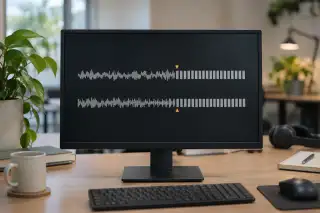
Classifier outperforms model at detecting perturbations
Researchers cautioned that identifying a perturbation's location does not imply broad access to a model's internal computation.
Emotional headlines raise AI severity ratings
Providing the article body reduced the effect of headline wording on AI severity ratings, the paper reported.
LIS claims safety alignment gains with a smaller dataset
The researchers address safety and unnecessary refusals together, but the abstract omits evaluation model names and benchmark-specific scores.
Australia’s AI safety mandate raises a question of focus
Making AI safeguards mandatory and choosing the right risks to regulate are separate policy judgements.
Safety score calibration cuts harmful responses in VLM test
Researchers report fewer harmful responses after training a vision-language model with calibrated scores and limits on harmful assistance and unnecessary refusals.
OpenAI commits $2 million to child AI safety research
The funding supports research on shared tools to measure AI's risks and opportunities for young people.
New York plans independent tests of AI models
New York's plan to scrutinise companies' claims externally should be read separately from the results those tests may produce.
Natural safety responses improve retention after training
Researchers propose NEST, a training approach that uses context-aware safety responses instead of formulaic refusals.
Binance warns iOS users of app isolation vulnerability
Developer release notes list tested iOS versions and installation requirements, while the researcher says the code is unrelated to jailbreaking.
KTC plans digital medical product research event
Testing institutes, a hospital and a university consortium member will discuss research directions for the safety and reliability of AI-based digital medical products.
Claude Fable 5.2 lowers input and output prices
Lower prices than the previous version leave data retention exceptions subject to each service’s terms.
SPECTRA proposes restoring model refusals without retraining
Researchers report that transferring a base model’s refusal direction improves safety while preserving specialist knowledge.
JCMC proposes controls for persistent language model memory
The design checks predicted memory effects against observed results, but the paper reports no performance comparison with simpler retrieval methods.
OpenAI control system blocks risky output within 35 seconds
The system revokes a problem task's execution permissions while keeping the model and other research running.OpenAI's Control Room tracks and can stop research workloads
OpenAI's introduction promises human control but does not say who stops a workload or by what standard.
Soongsil decoy servers block ARTEX AI tool in 60-server test
The test opponent was a tool disclosed as used in state-backed hacking, and public materials show no deployment on live production servers.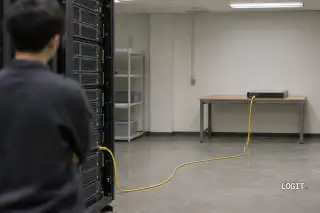
2 weeks agoNov 08
METR estimates 1.9x faster benchmark progress at Anthropic
METR attributed about 80% of the current acceleration to AI use, but Anthropic redacted a majority of the evidence behind that judgement.
3 weeks agoOct 26 – Nov 02
Anthropic open-sources FlashProve to verify AI model outputs
The system checks which model produced a response while keeping the weights hidden, but Anthropic has not given a schedule for using it in Claude services.
OpenAI strengthens violence prevention safeguards in ChatGPT
OpenAI cites expanded safeguards and earlier intervention, but its summary gives no timing or effect figures for individual measures.OpenAI charges $1 per million input tokens for GPT-6.1 Terra
The standard API price is 50% lower than GPT-5.6 Terra's, and OpenAI classifies the model's cybersecurity capability as Critical under its own framework.
Oct 2026Oct 12 – Oct 23
OpenAI and Poland's NASK cooperate on AI safety and security
The partnership aims to strengthen safeguards, but the announcement summary names no specific projects or duration
Anthropic reports illicit distillation rate down by over 90%
The reduction is a company-reported figure, and the public summary gives no sample or measurement period.
Meta offers Muse Wonder agent model on its API and Muse Code
Performance claims rest on company-published figures, and the announcement gives no API pricing or publication date for the full safety report.
34 in totalWritten by Gyeol HanRSS feed