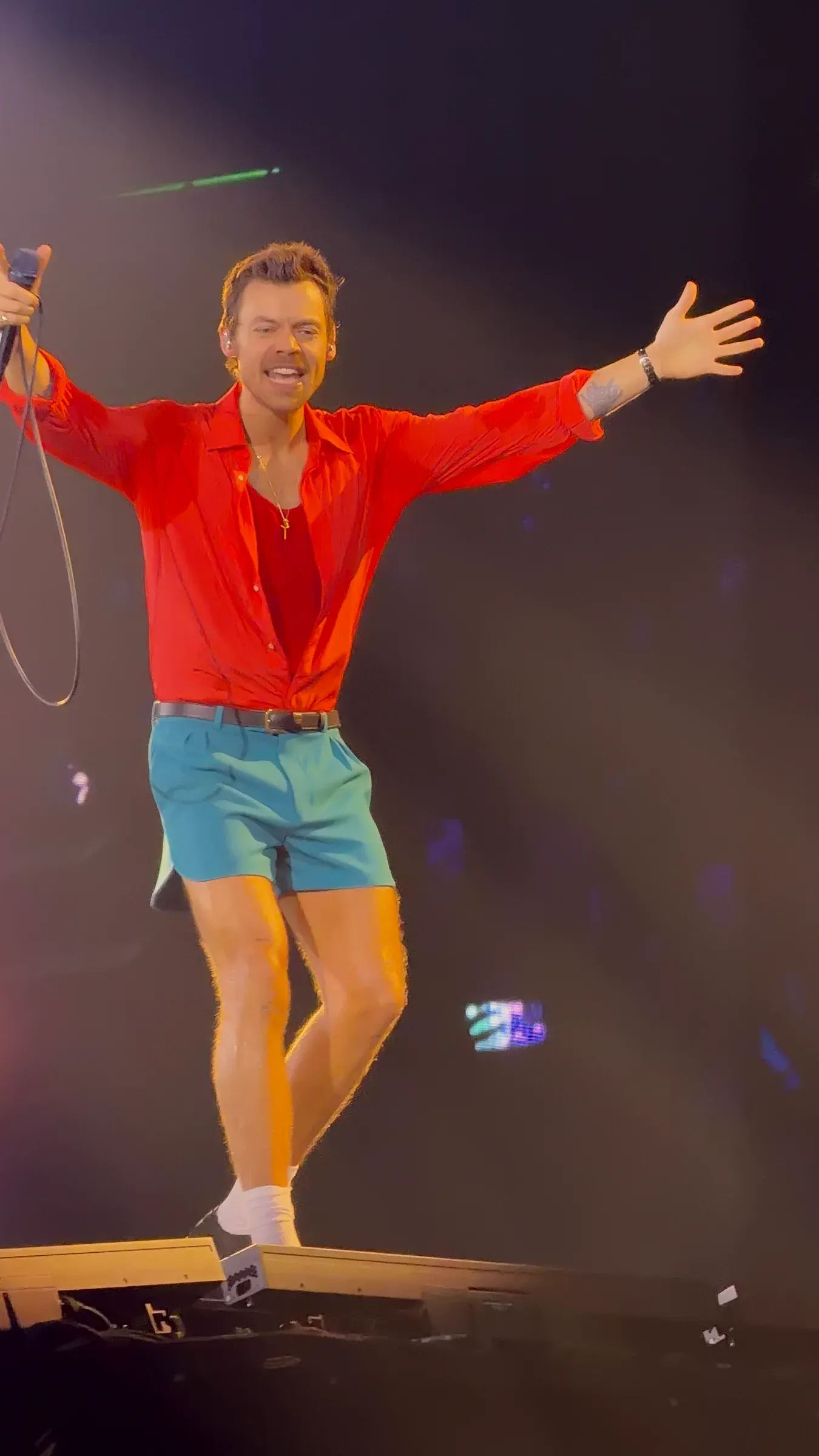
A closer look at the scenes and context surrounding Harry Styles's music.
On Kiss All The Time. Disco, Occasionally., Harry Styles uses repetition to loosen the outline of the pop star.
Released March 6, 2026 through Erskine and Columbia Records, his fourth album arrives after nearly four years of extraordinary visibility and deliberate absence. Its 12 songs do not answer that scale with larger choruses or a grand autobiography. They search for freedom in rhythm: the moment when a body stops performing individuality and joins the room.
Aperture opens slowly enough to change shape
The five-minute opener refuses the efficient architecture of a comeback single. Synth patterns accumulate, the pulse sharpens and Styles lets his vocal move from private murmur toward communal invitation. The song behaves less like an announcement than a lens gradually admitting more light.
That patience establishes the album's central idea. Freedom is not presented as escape from attention. It comes from changing the relationship to attention - allowing repetition, movement and other people to interrupt the fixed image of Harry Styles.
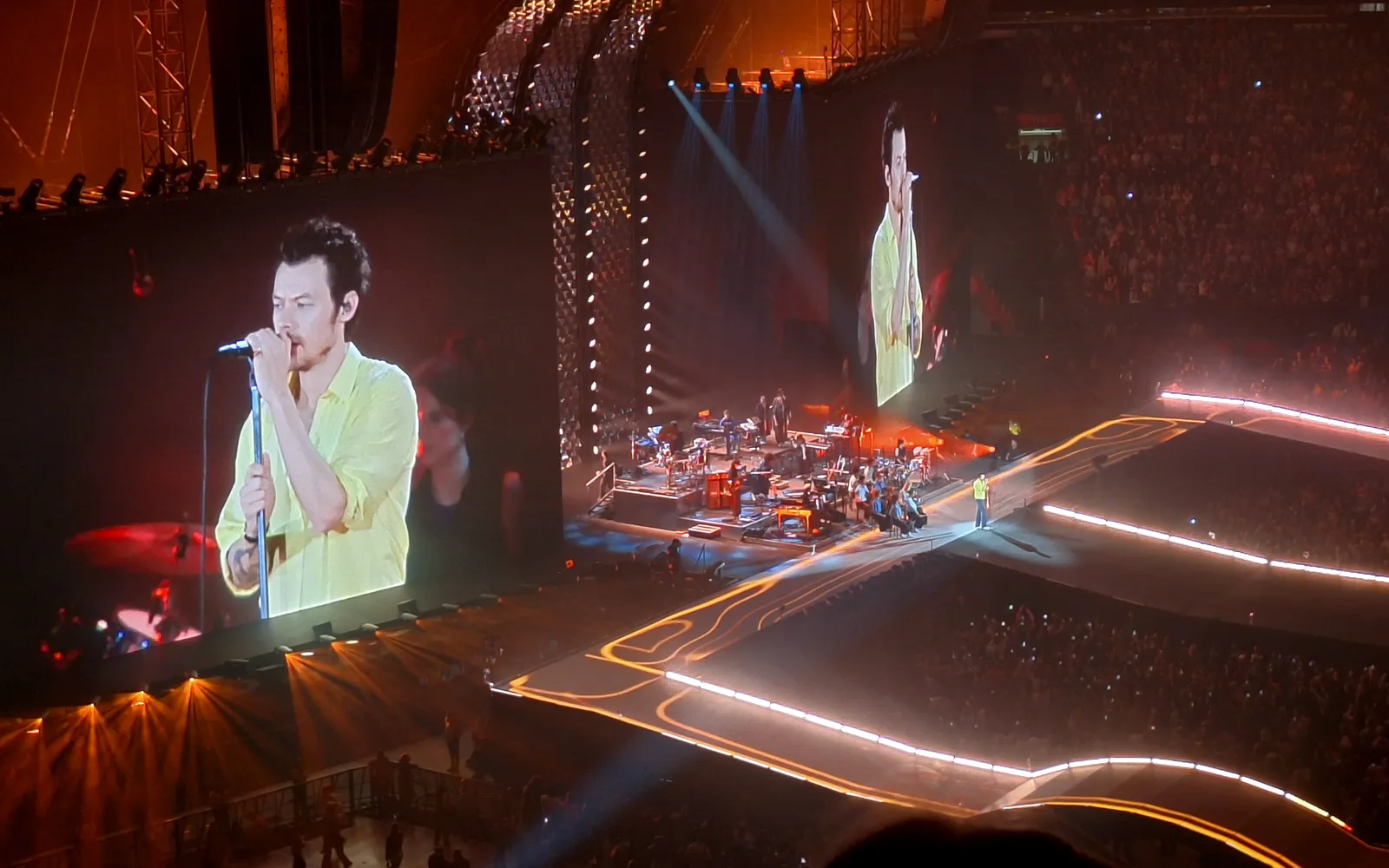
Photo: Harry Styles performing on the Together, Together tour in Amsterdam in 2026. GYSZ via Wikimedia Commons, licensed CC BY-SA 4.0.
Disco is a social condition
The title promises disco only occasionally, and the record keeps that promise literally. This is not a sequence of period reproductions. Electronic pulses, post-punk restraint, soft rock and funk appear as different ways to organize bodies in space.
What connects them is repetition. Bass figures circle rather than resolve. Synths build pressure through duration. Choruses often feel like groups of people finding the same phrase at the same time. Disco matters not as costume but as a theory of togetherness.
American Girls turns spectacle into a set
The second track is brighter and more immediate, but its official video reveals the unease inside the polish. Styles moves through an action-film environment of vehicles, danger and manufactured risk. Spectacle is exposed as labor, choreography and machinery.
The song makes a similar move. Its pop surface is clean enough to travel instantly, while the vocal remains slightly detached from the fantasy it describes. Desire is present, but so is the awareness that desire becomes a story the moment a camera arrives.
Kid Harpoon produces space, not decoration
Longtime collaborator Kid Harpoon executive-produces the album, and his most important contribution is restraint. Arrangements rarely compete for novelty. They establish a physical rule - a pulse, texture or harmonic loop - and let Styles decide how long to remain inside it.
This approach differs from the ornamental abundance of Harry's House. That record furnished every room with hooks. The new album leaves more floor visible. Small changes in vocal pressure, percussion and stereo space become structural events.
Are You Listening Yet? asks the wrong question correctly
The title can sound like a star demanding attention, but the album repeatedly reverses the direction. Styles is also the one learning to listen: to a groove, a partner, an audience and the silence that follows scale.
His singing is less interested in proving range than in altering proximity. Close phrases sit beside airy doubles and distant group vocals. The record keeps asking who owns the center, then quietly moves the center somewhere else.
Dance No More believes the body over the title
The album's clearest rush is built on a contradiction. The title announces withdrawal while the rhythm refuses stillness. Funk guitar, bass and percussion turn hesitation into momentum, and Styles sounds most convincing when the performance stops guarding its cool.
The official video makes that argument visible through mass choreography. The pleasure comes not from watching one exceptional dancer dominate the frame, but from seeing individual movement become contagious. The pop star remains identifiable while surrendering some control over the picture.
Pop names the machine from inside it
A song titled Pop cannot avoid sounding self-conscious on an album by one of the world's largest pop stars. Styles responds by treating the word as both genre and physical event: a burst, a release, something designed to vanish as soon as it is felt.
The track's playfulness gives the record needed friction. Elsewhere, its interest in atmosphere can become solemn. Pop remembers that lightness is not the absence of craft. It is craft that knows when to disappear.
Carla's Song restores a human name
After an album preoccupied with crowds, lenses and shared movement, the closer narrows the frame to a person. The proper name matters. It prevents the record's ideas about togetherness from becoming abstract and reminds us that community is built from specific relationships.
The song does not provide a neat explanation for the album. It offers a gentler scale. Styles ends not by escaping the public room, but by locating one voice inside it.
Where anonymity becomes vagueness
The album's desire to dissolve the star sometimes dissolves the writing with him. Several lyrics prefer mood to detail, and the midsection can feel emotionally under-described. Repetition is powerful when it changes perception; it is less persuasive when a song has not supplied enough material to transform.
The polished restraint also limits surprise. Even the strangest textures arrive carefully framed. Styles approaches risk with excellent taste, but excellent taste can become another form of control.
Verdict
Kiss All The Time. Disco, Occasionally. is Harry Styles' most convincing argument for pop as a collective experience. It does not reject stardom or pretend the camera can disappear. It asks what the star can do once the beat makes everyone equally responsible for the room.
The album is occasionally too elegant to become truly disorienting, yet its best moments find freedom through duration, proximity and movement. Styles does not leave the spotlight. He widens its aperture until other bodies fit inside. Rating: 8.4/10.
Sources: Sony Music and Columbia Records release materials; official Harry Styles videos; official Spotify album and track data; Associated Press album coverage. Cover photo by Wilnel Jose Verdu Guerrero via Wikimedia Commons, licensed CC BY-SA 4.0.