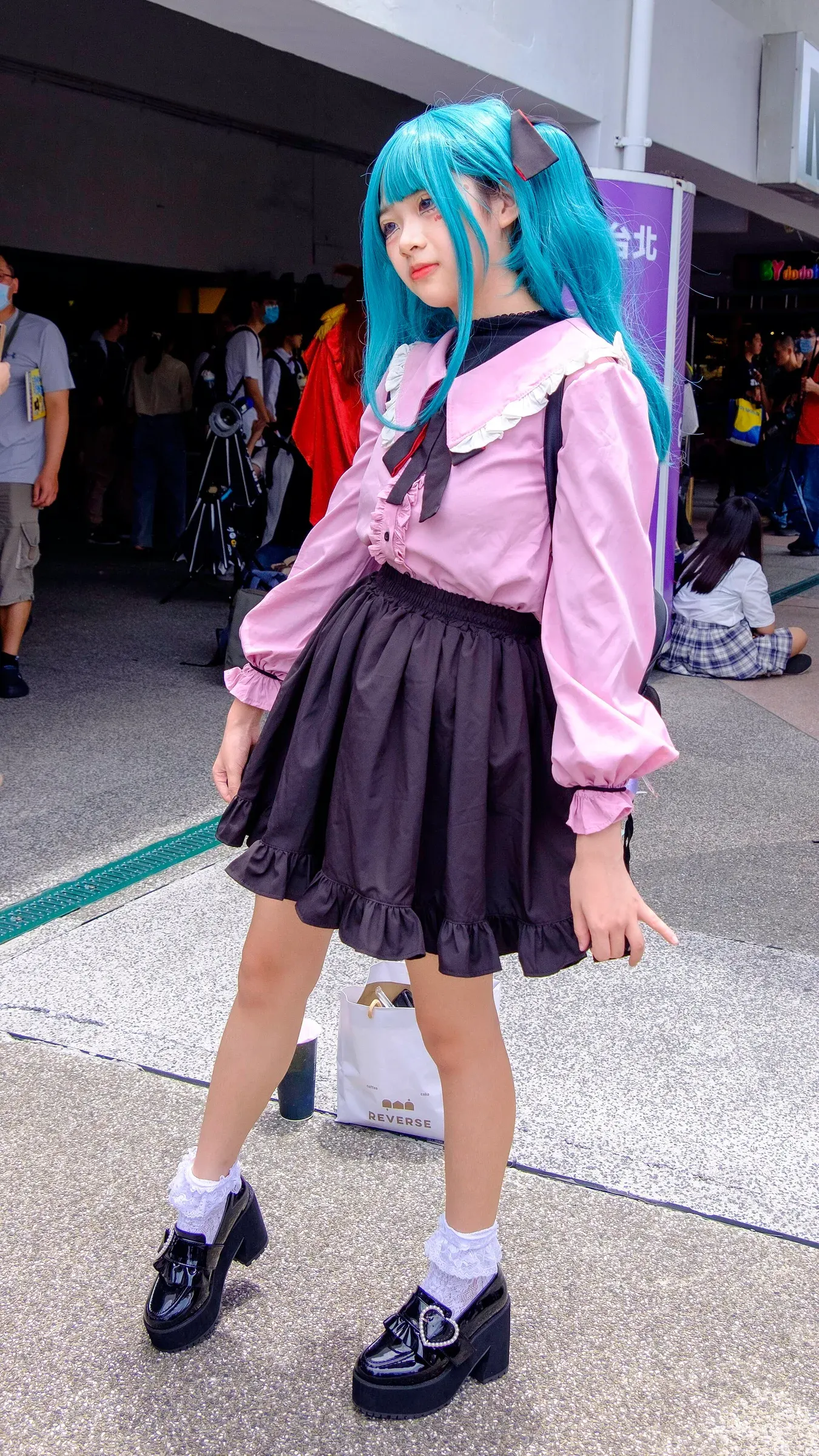
A closer look at the scenes and context surrounding ryo (supercell) feat. Hatsune Miku's music.
“World Is Mine” sounds like one girl demanding the center of the room. Hatsune Miku’s deeper revolution was that the room belonged to anyone willing to make her sing.
Crypton Future Media released the Hatsune Miku voice-synthesis software in 2007, built from samples recorded by voice actor Saki Fujita. In May 2008, producer ryo uploaded “World Is Mine,” a theatrical pop-rock song that would become one of Miku’s defining performances and a gateway into the participatory culture surrounding her.
Miku is often described as an AI singer, but that label blurs the authorship that matters. She is a vocal instrument and character framework: a producer enters melody and lyrics, then shapes timing, dynamics and pronunciation. The voice is synthesized; the musical intention is human. “World Is Mine” became enormous because ryo wrote a personality vivid enough for thousands of listeners to recognize, reinterpret and share.
The opening turns entitlement into rhythm
The song begins with brisk piano and guitar before Miku declares herself the world’s number-one princess. The lyric is not a confession of vulnerability disguised as confidence. It is a list of rules, preferences and corrections delivered with comic precision. Each demand creates another rhythmic hook.
ryo’s melody climbs as if the singer is standing on tiptoe to remain impossible to ignore. Short phrases snap against the beat, while longer notes briefly expose the synthetic grain of the voice. That contrast makes the character: imperious in language, strangely weightless in sound.
A voicebank becomes an actor
Miku does not breathe, hesitate or strain unless a producer writes those gestures into the performance. “World Is Mine” turns that limitation into style. Its quick syllabic runs feel too neat for an ordinary throat, while small pitch curves suggest a person just beyond the software’s surface.
The result is not realism. It is acting through parameters. ryo uses articulation, register and timing to construct a spoiled but magnetic narrator whose exaggerated self-regard carries traces of insecurity. The performance works because listeners complete the emotional information the synthesis leaves open.
The chorus makes possession communal
“World is mine” is a declaration of ownership, yet the song’s cultural life belongs to no single performer. Producers covered it, illustrators redrew it, dancers embodied it, rhythm games made it playable and concert audiences answered it in unison. A lyric about commanding attention became a platform for distributed participation.
This paradox defines Hatsune Miku. Her face is recognizable, but her catalog has no stable authorial center. Every song can assign her a different age, mood, genre or moral position. The character remains constant enough to gather a public and open enough for that public to keep changing her.
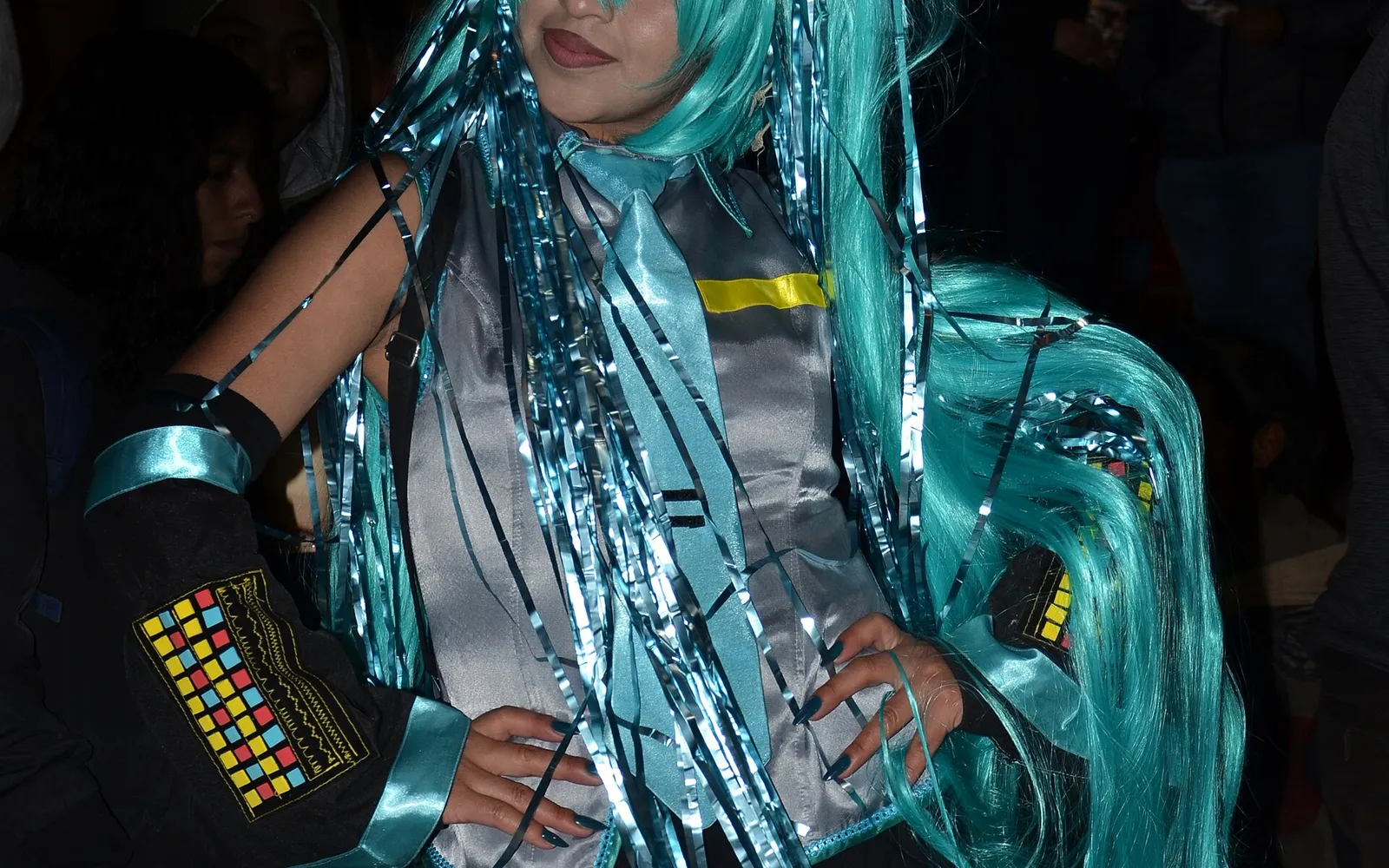
Hatsune Miku cosplay photographed in Oruro, Bolivia. Photo by Carla Lidia via Wikimedia Commons, licensed CC BY-SA 4.0.
The band arrangement supplies physical heat
Behind the synthetic lead, ryo builds a familiar rock-pop engine: bright piano, compressed drums, distorted guitar and bass moving with theatrical urgency. The instrumentation gives Miku a body by proxy. Cymbal crashes provide impact where the voice cannot; guitar accents turn verbal irritation into motion.
The arrangement is densely packed, but its harmonic language stays direct. That clarity leaves room for the vocal programming to function as the song’s most unusual texture. Rather than hiding the machine inside acoustic warmth, ryo lets human-band energy and digital precision rub against each other.
The live version changes who performs
When “World Is Mine” appears in concert, a projected Miku stands before a live band while an audience supplies cheers, glow-stick choreography and collective memory. The visual figure does not experience the room, but the event is not therefore empty. Presence migrates into the relationship among musicians, image and crowd.
A conventional singer anchors attention through a vulnerable physical body. Miku concerts distribute that function. The band gives tempo and force, the projection gives focus, and the audience supplies the proof that a shared fiction can produce real coordination.
Tell Your World reveals the network
kz (livetune)’s “Tell Your World” later made the participatory idea explicit. Its melody travels through bright electronic layers while the lyric imagines isolated sounds connecting into a larger line. Where “World Is Mine” demands a spotlight, “Tell Your World” explains the infrastructure that keeps the spotlight lit.
Together the songs outline two sides of Miku culture. One provides a sharply authored character performance; the other celebrates circulation itself. Neither treats technology as an autonomous creator. Software becomes meaningful through the chain of people composing, tuning, drawing, animating, remixing and listening.
Miku can cross an ocean without changing bodies
Anamanaguchi’s “Miku” demonstrates how easily the voice can enter another production language. The New York band surrounds her with chiptune sparkle, rock momentum and an English-language hook. Miku sounds recognizably herself while functioning inside a different scene’s idea of digital pop.
That portability is not the same as neutrality. Her Japanese phonetic design, visual codes and history travel with her. But each new producer negotiates with those constraints rather than merely borrowing a mascot. The most convincing collaborations make the negotiation audible.
The imperfections became a vocabulary
Early Miku performances can sound thin, bright and mechanically precise beside newer synthesis systems. “World Is Mine” does not overcome those qualities; it composes with them. The narrowness of certain vowels and sudden transitions between notes become expressive markers as identifiable as a human singer’s rasp.
Later software offers smoother control, expanded languages and more natural articulation. Yet technical improvement does not automatically create stronger performance. Miku’s history shows that listeners form attachments to limitations once artists turn them into a repeatable vocabulary.
Authorship is plural, but not anonymous
The openness of Miku culture can tempt critics to describe the character herself as the author. That shortcut erases ryo from “World Is Mine,” kz from “Tell Your World,” and the vast number of producers whose decisions distinguish one Miku performance from another.
A better credit model begins with the composer and programmer, then acknowledges the sampled voice, software developers, illustrators and communities that carry a work forward. Miku is not a person pretending to have made all these songs. She is a durable interface through which many people make radically different ones.
Where the princess shows her age
“World Is Mine” is attached to a deliberately exaggerated feminine stereotype: demanding, decorative, emotionally manipulative and waiting for a boy to respond correctly. The performance is funny and knowingly theatrical, but its gender script can feel narrower than the creative culture it helped unlock.
The arrangement also repeats its central gestures with little harmonic risk. Its durability comes less from compositional surprise than from character clarity and historical position. Later Vocaloid songs would push timbre, narrative and speed much further.
Verdict
“World Is Mine” remains essential because it made a synthesized voice feel less like a demonstration and more like a role somebody desperately wanted to play. ryo supplied the song, tuning and attitude; Miku supplied a recognizable instrument and image; the audience turned both into a public ritual.
The track’s princess claims the world for herself. The culture around her answers by sharing it. That productive contradiction is why Hatsune Miku still matters: not as a machine replacing singers, but as a voice that taught a network of human creators to hear one another. Rating: 9.0/10.
Sources: Crypton Future Media and Piapro official character and software materials; SONICWIRE product information; official artist videos; official Spotify release information. Cover photo of Hatsune Miku cosplay by 玄史生 via Wikimedia Commons, dedicated CC0.