01 / AI · Analysis
Robot depth model runs at 27.1 frames per second on Hailo-8L
Researchers reported that the new model ran faster on the accelerator and that their outdoor test could not distinguish the two models' depth accuracy.
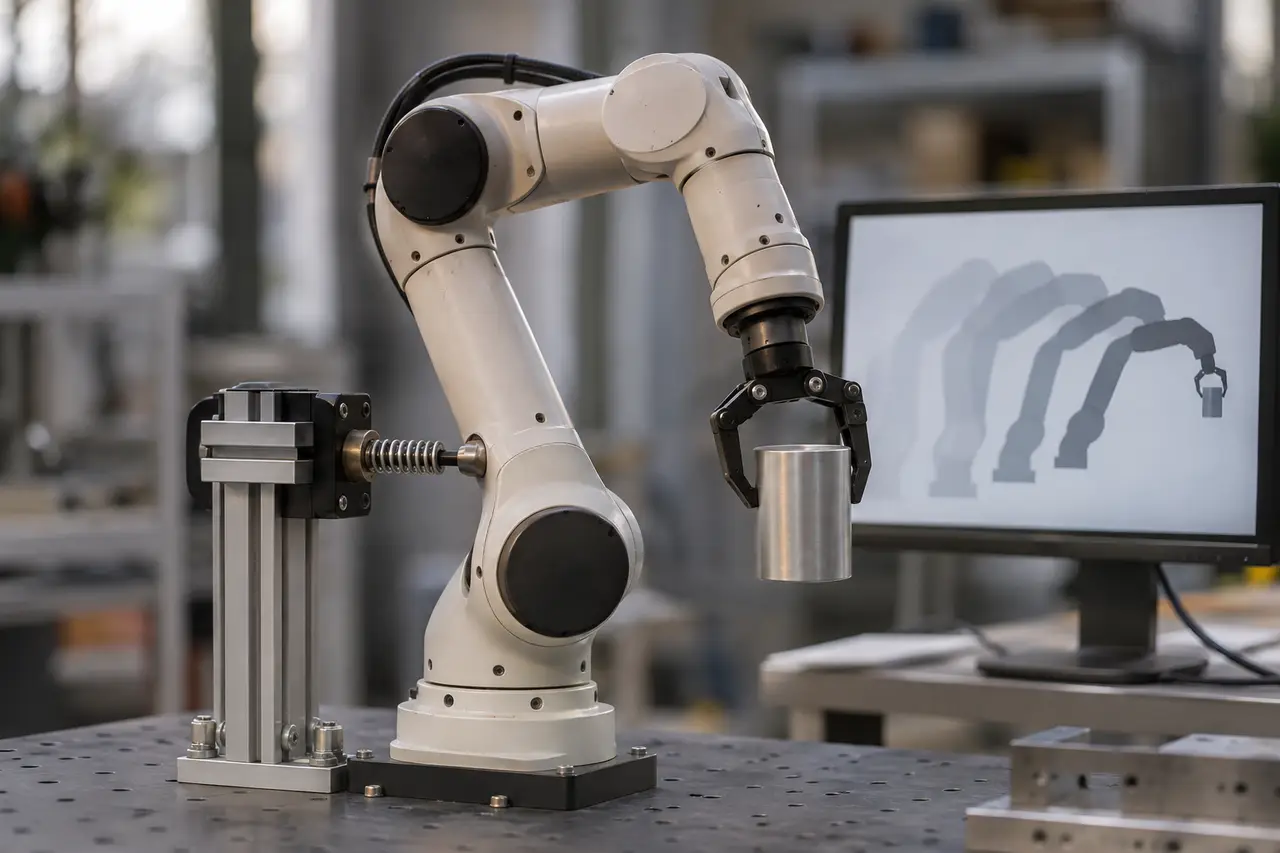
Researchers reported that a depth model for robot navigation processed 27.1 frames per second on a Hailo-8L accelerator connected to a Raspberry Pi 5.
The robot estimated distances to obstacles from camera images, according to the paper. Path planning ran on the same board's CPU.
The paper describes how the new model learned from Depth Anything V2-Large's depth predictions. Its design omits attention, a mechanism that computes how different regions of an image relate to one another.
Depth error during outdoor driving
The researchers compared depth estimates at 1,000 points from an outdoor drive. They used images from two viewpoints to check the depth at each point.
The paper used the accelerator vendor's build of Depth Anything V2-Small for comparison. The researchers reported that it processed 21.6 frames per second on the same Hailo-8L.
The researchers wrote that the outdoor comparison could not distinguish the two models' depth accuracy.
Obstacle avoidance in simulated driving
According to the paper, the researchers tested navigation in a simulation that recreated a real yard. The system estimated obstacle distances using the camera height and the points where obstacles met the ground.
The researchers reported that the robot reached its destination without contact less often when it estimated obstacle positions than when it was given their exact positions. The abstract does not give a contact-free completion rate for real outdoor driving.