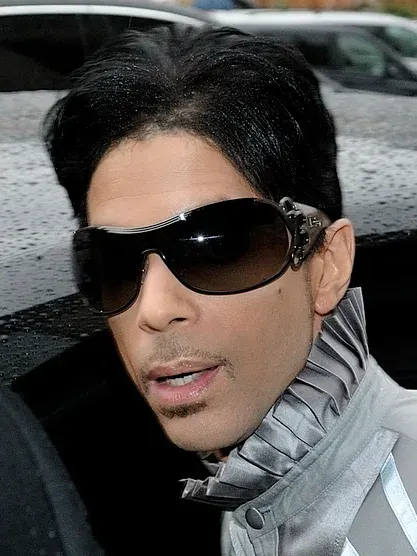
A closer look at the scenes and context surrounding Prince's music.
Prince's central fantasy was total musical agency: write the song, play the instruments, produce the record, design the stage, direct the image and decide how the work reaches its audience. The fantasy was never perfectly achievable, which is why the struggle became part of the art.
His catalogue moves with unusual speed through funk, rock, R&B, pop, gospel, jazz, psychedelia, electronic music and forms that become less useful once named. Prince did not treat genre crossing as prestige. It was the normal condition of a musical mind that heard instruments as interchangeable extensions of rhythm.
The famous image is a solitary genius surrounded by his own abilities. The fuller story includes bands, protégés, engineers, song recipients and creative foils whose labor shaped the sound. Prince's authorship was vast, but it was never empty of other people.
For You presents self-sufficiency as an opening claim
Prince's debut For You announced that he had produced, arranged, composed and performed the music. For a young Black artist entering the major-label system, that credit was more than vanity. It asserted technical authority in an industry accustomed to separating singer, writer, producer and instrumentalist.
The album does not yet contain the full compression of his mature work, but "Soft and Wet" establishes sensual directness, falsetto elasticity and a groove that treats eroticism as intelligence rather than decoration.
Prince finds the pop shape inside the groove
The self-titled second album sharpens his songs. "I Wanna Be Your Lover" uses bright keyboard, guitar, bass and layered vocals to make desire feel buoyant. The arrangement is spare enough that each part remains visible.
Prince's multi-instrumentalism mattered not because one person playing everything is automatically superior. It allowed arrangement and composition to happen as one continuous decision. A bass line could change because the drum demanded it, and a vocal could answer a guitar part conceived by the same rhythmic imagination.
Dirty Mind removes the walls between scenes
Dirty Mind sounds lean, fast and unconcerned with market boundaries. New wave synthesizers, funk bass, rock guitar and bedroom directness occupy the same small room. The record's homemade surface becomes an argument for immediacy.
Its sexual material ranges from liberating provocation to scenarios that remain deliberately uncomfortable. Prince used taboo to test what pop could say, but transgression is not self-justifying; some gestures gain complexity with context, while others retain the limits of their provocation.
Musically, the album establishes economy as force. Songs end before the groove becomes routine. Prince understands that repetition works best when the listener wants one more cycle.
Controversy makes contradiction the subject
"Controversy" places public questions about Prince's race, sexuality, religion and identity inside a robotic funk pulse. He does not answer the questions. He repeats them until the demand for a stable category becomes absurd.
The Lord's Prayer appears inside a track about sexual and social ambiguity, collapsing sacred and profane space. This tension would remain central. Prince's work does not move from faith to desire or desire to faith; both inhabit the same body and frequently argue in the same song.
1999 turns apocalypse into a dance instruction
The title track of 1999 imagines catastrophe and answers with collective celebration. Its opening voices distribute identity across the band, while the Linn LM-1 drum machine gives the groove a hard electronic frame.
"Little Red Corvette" combines rock-scale melody with R&B phrasing and a lyric that turns automotive metaphor into character study. "D.M.S.R." stretches funk into a social program. "Something in the Water (Does Not Compute)" makes emotional confusion sound like malfunctioning circuitry.
The double album shows Prince learning to make private eccentricity operate at arena scale without smoothing away its odd angles.
The Revolution changes the meaning of the name
As the Revolution developed, Prince's records and performances gained a visible collective. Wendy Melvoin, Lisa Coleman, Brown Mark, Bobby Z and Dr. Fink brought distinct musicianship and stage identity. The band's racial and gender composition also challenged the conventions of mainstream rock presentation.
Prince remained the dominant author, but the Revolution was not a prop. Rehearsal, arrangement and interpersonal friction helped transform songs. The sound of total control was partly the sound of a leader choosing collaborators capable of resisting simplicity.
When Doves Cry removes the bass and keeps the body
"When Doves Cry" is one of Prince's clearest production revolutions. After building a track with drum machine, synthesizer, guitar and layered vocals, he removed the bass line. The resulting space makes every remaining element more exposed.
The groove still feels physical because rhythm is distributed across the arrangement. Vocal gasps, keyboard figures and guitar attack supply the motion a conventional bass part might anchor. Absence becomes instrumentation.
The lyric turns family inheritance and romantic conflict into one unstable mirror. Prince's vocal shifts between close complaint, falsetto vulnerability and multiplied chorus, allowing a private argument to become a landscape.
Purple Rain builds a complete public mythology
The album and film Purple Rain joined music, image, narrative and live performance into an event. "Let's Go Crazy" begins as a sermon and accelerates into rock release. "The Beautiful Ones" moves from intimate pleading to a scream that sounds physically unsustainable. "Darling Nikki" helped trigger debates that contributed to parental-advisory labeling.
The project made Prince a global superstar, but its durability comes from contrast. Electronic minimalism sits beside maximal guitar, devotional language beside erotic confrontation, individual control beside the named presence of a band.
Purple Rain lets a simple progression become weather
The title track grew through live performance with the Revolution. Its harmonic foundation is spacious, giving the arrangement room to become communal. Prince's guitar does not merely solo over the song; it extends the vocal after language has reached its limit.
The recording's live origin matters. Audience, band and room are inside the final artifact. One of Prince's most universal songs is therefore evidence against the myth that total authorship means isolation.
Its scale comes from patience. Chords bloom, the vocal waits, and the closing wordless section allows thousands of listeners to enter without reducing the song to a slogan.
Around the World in a Day refuses to repeat the victory
After Purple Rain, Prince released the psychedelic Around the World in a Day rather than manufacturing a direct sequel. "Raspberry Beret" uses strings, bright melody and narrative detail, while "Paisley Park" turns a physical and imagined place into a creative principle.
The quick turn protected curiosity from the machinery of blockbuster expectation. Prince understood that repeating success can be a deeper commercial compromise than making something difficult.
Parade makes elegance percussive
Parade, connected to the film Under the Cherry Moon, is full of negative space, orchestral color and unusual sequencing. Clare Fischer's arrangements expand Prince's palette without making the music heavy.
"Kiss" is radically spare. Guitar scratches, drum machine and falsetto leave no place for weak rhythm. The song's authority comes from subtraction, each sound carrying more weight because so few are present.

Los Angeles City Hall illuminated purple after Prince's death in April 2016. Image from the Office of the Los Angeles Mayor via Wikimedia Commons, public domain as a California government work.
Sign o' the Times contains a city of voices
Sign o' the Times emerged after the dissolution of the Revolution and the abandonment or recombination of several projects. Its double-album range is not random abundance. Different vocal characters, production scales and social spaces coexist like neighborhoods.
The title track places AIDS, drugs, violence and disaster over a skeletal electronic beat. Prince sings with reportorial calm, allowing the emptiness around the words to become dread. "Housequake" makes a sped-up voice into party command. "If I Was Your Girlfriend" asks whether romantic intimacy can include forms of closeness coded as friendship between women.
"The Ballad of Dorothy Parker" turns an encounter into elliptical modern short fiction, while "I Could Never Take the Place of Your Man" hides loneliness inside bright guitar pop. "Adore" closes with slow-jam devotion and impossible vocal control.
The album is often called his masterpiece because it contains so many Princes. Its deeper coherence is rhythmic authorship: every world feels governed by the same attention to where sound should stop.
The Black Album and Lovesexy stage an argument
Prince withdrew The Black Album shortly before release, later replacing it with Lovesexy. The sequence has become mythology: darkness rejected for spiritual affirmation. The music is more complicated than a moral binary.
Lovesexy merges dense funk, gospel aspiration and psychedelic production. "Alphabet St." makes letters, samples and guitar into playful order, while "Anna Stesia" moves through desire and transcendence. Prince continually sought a language in which pleasure and faith could intensify rather than cancel one another.
Batman proves assignment can become laboratory
The Batman soundtrack entered a major film franchise but remains unmistakably Prince. He assigns songs to characters, treats dialogue samples as rhythm and turns conflict between hero and villain into competing musical personas.
"Batdance" is collage rather than conventional single, switching sections with comic-book speed. Commercial obligation becomes permission for formal chaos.
The New Power Generation makes ensemble visible again
With the New Power Generation, Prince returned to a named band whose muscular live sound supported hip-hop influence, dense funk and extended performance. Diamonds and Pearls and the Love Symbol album move between polished ballad, rap, rock and groove.
Rosie Gaines's vocal presence on "Diamonds and Pearls" is essential, not incidental. Tony M., Levi Seacer Jr., Michael Bland and other members brought personalities that complicated Prince's control. His best bands made virtuosity social.
The symbol turns a contract dispute into language
In 1993, Prince replaced his stage name with an unpronounceable symbol during conflict with Warner Bros. He appeared with the word "slave" written on his face and released music at a pace that challenged label control.
The rhetoric was intentionally shocking and has been criticized for appropriating the language of chattel slavery to describe a wealthy artist's contract. That criticism is necessary. At the same time, the dispute foregrounded questions that remain urgent: who owns masters, who controls release schedules, and how much of an artist's future can be exchanged for distribution?
The symbol made a legal and industrial struggle visible in everyday speech. Journalists could not say the name without explaining the conflict.
The Gold Experience turns blockage into intensity
The Gold Experience arrived amid that dispute with a fictionalized interactive frame and some of Prince's most concentrated 1990s work. "P. Control" is provocative character funk; "The Most Beautiful Girl in the World" offers lush falsetto pop; "Gold" reaches for arena-scale affirmation.
The album's bright surface contains frustration about access. Music existed, audiences wanted it, and the route between them had become the subject.
Emancipation mistakes freedom for abundance—and documents it
After leaving Warner, Prince released the three-disc Emancipation. Its length can overwhelm, but excess is the concept. The artist tests what contractual freedom sounds like when no label forces reduction.
Not every experiment requires equal permanence. Yet the album captures the exhilaration and difficulty of autonomy: control solves one problem while creating the responsibility to edit oneself.
Rave Un2 the Joy Fantastic seeks a new mainstream
At the end of the 1990s, Prince worked with a wide guest list and major-label distribution again. The project sometimes strains for contemporary relevance, but it confirms his refusal to inhabit heritage status.
Prince's relationship with the mainstream was cyclical. He desired mass communication, resisted its conditions, then invented new terms for returning.
The internet offered both freedom and friction
Prince experimented early with direct digital distribution, subscription clubs and web releases. He understood that the internet could reduce dependence on labels, but he also became known for aggressive control over unauthorized online use.
These positions are not entirely contradictory. Both emerge from a belief that music should move according to the artist's decision. The unresolved question is how that control interacts with audience creativity, preservation and cultural circulation.
Musicology turns the catalogue into a living school
Musicology and its tour introduced or reintroduced Prince to a broad 2000s audience. The title track presents funk history as active knowledge rather than retro styling. Concerts moved across hits, deep cuts and instrumental demonstrations with astonishing fluency.
Prince could now use legacy as material without surrendering to it. The stage became a classroom in which authority was proven through play.
The Super Bowl makes weather part of the arrangement
Prince's 2007 Super Bowl halftime performance took place in heavy rain, a production hazard that became inseparable from the image. Rather than shrink the show, the weather magnified silhouette, light and guitar.
The set moved through his songs and covers before "Purple Rain" transformed literal rain into theatrical completion. It is remembered as spontaneity, but its force depended on decades of stage discipline. Prince could use accident because the underlying performance was exact.
3121 and Lotusflow3r keep multiple systems alive
Later albums moved through compact funk, rock guitar, spiritual reflection and experiments in distribution. Prince released music through concert tickets, newspapers, retailers, websites and streaming relationships, treating the delivery mechanism as part of the work's politics.
The volume of output made critical consensus difficult. Prince often preferred circulation on his terms to the scarcity that helps institutions label every release an event.
Art Official Age studies time with synthetic voices
Art Official Age uses a science-fiction frame to examine aging, technology and desire. Prince's voice is processed, multiplied and placed in dialogue with a future that finds his old assumptions unfamiliar.
The album shows that late style need not mean acoustic seriousness. Digital artifice can be a tool for confronting time as effectively as a stripped piano.
Piano & a Microphone returns totality to two hands
Prince's final tour reduced the stage to piano and voice. The format did not reject the maximal catalogue. It revealed how much of that catalogue could survive in harmony, rhythm and touch without the full band.
At the piano, Prince remained arranger, singer, percussionist and conductor. Totality had never depended on the number of instruments sounding at once.
The vault complicates the idea of completion
Prince left an enormous archive of unreleased recordings, alternate versions, rehearsals and live tapes. Posthumous releases demonstrate both extraordinary productivity and the ethical difficulty of publishing work an artist chose not to release.
The vault should not be treated as a mine whose only purpose is to extend a market. It is an archive of process. Alternate versions show decisions being made; songs given to other artists reveal a distributed creative network; unfinished work preserves uncertainty.
Gender performance expanded the available body
Falsetto, heels, lace, color, makeup and physical smallness became sources of authority in Prince's presentation. He combined signs coded masculine and feminine without asking rock to resolve the combination.
This did not place him outside every conventional gender dynamic; his work and professional relationships include contradictions worthy of critique. But the stage body he created expanded what command could look and sound like for generations of performers.
He wrote hits that escaped his own voice
Songs written by Prince became landmarks for artists including The Bangles, Sinéad O'Connor, Chaka Khan, Sheila E. and others. These versions demonstrate that his songwriting was not dependent on one persona.
They also complicate ownership and recognition. A song can be authored, given, transformed and culturally associated with another voice. Prince's catalogue exists as a network across popular music, not only a stack of albums under his name.
The guitar was one language among many
Prince's guitar heroism is undeniable, from "Purple Rain" to the famous Rock and Roll Hall of Fame performance of "While My Guitar Gently Weeps." Yet treating guitar as proof of "real musicianship" reproduces a hierarchy his work repeatedly broke.
Drum programming, synthesizer arrangement, falsetto layering, bass economy and studio editing were equally central. Prince was remarkable because no instrument was allowed to define the border of musicianship.
Total control was impossible—and creatively productive
Prince's career makes a powerful case for artist ownership, but it also demonstrates that music is relational. Bands changed songs. Engineers captured rooms. Audiences completed performances. Contracts enabled and constrained distribution. Later custodians now make decisions about the archive.
The dream of total agency created extraordinary work because reality kept resisting it. Every resistance produced another question about form, business or identity.
Prince compressed a band into one body, then spent a lifetime discovering that even one body contains a crowd. His greatest achievement was not doing everything alone. It was hearing every part as available—and insisting that the person creating the world should have power over how it is named, owned and heard. Cover Story rating: 9.9/10.
Sources: Prince official catalogue and estate releases; official Prince videos; official Spotify recordings; Warner Bros. and NPG catalogue documentation. Cover photo by Nicolas Genin via Wikimedia Commons, licensed CC BY-SA 2.0. Inline image from the Office of the Los Angeles Mayor via Wikimedia Commons, public domain as a California government work.